Digital ad buying can feel messy fast. Advertisers deal with too many platforms, unclear fees, wasted impressions, weak audience targeting, and reports that do not always show what really happened.
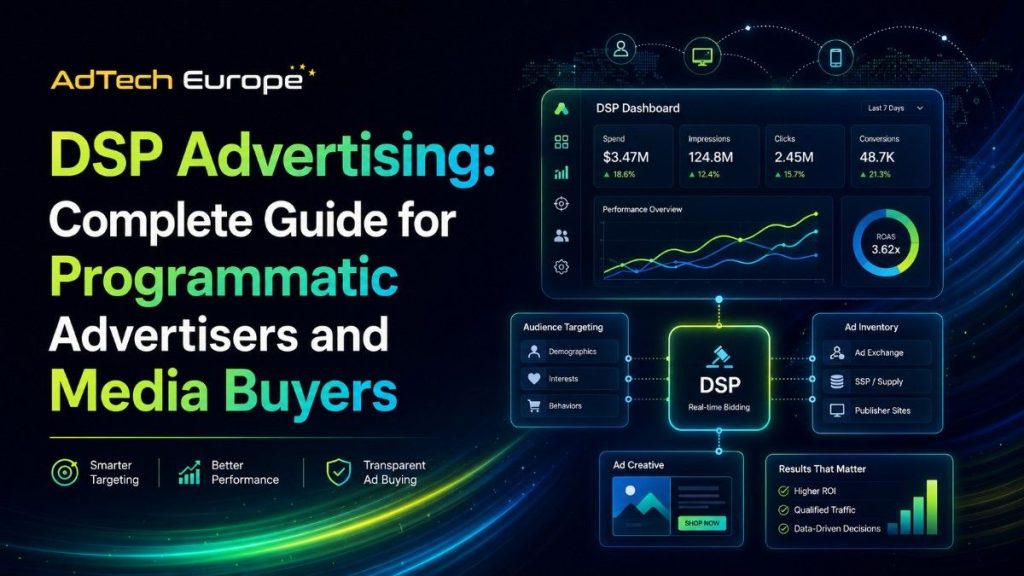
That is the problem DSP marketing solves. A demand-side platform helps advertisers, agencies, and media buyers buy digital ad inventory in a faster, smarter, and more controlled way. Instead of buying media one publisher at a time, a DSP lets you access many ad exchanges, supply partners, audiences, and bidding options from one system.
For brands that want better performance, lower waste, and more control over programmatic buying, DSP marketing is not just a tool choice. It is a business decision. The right DSP can improve campaign reach, bidding accuracy, budget pacing, transparency, and long-term media buying independence.
What Is DSP Marketing?
DSP marketing is the use of a demand-side platform to plan, buy, manage, and optimize digital advertising campaigns through programmatic technology.
A DSP helps advertisers buy ad impressions across websites, apps, video platforms, connected TV, and other digital channels. It does this through real-time bidding, where each impression is evaluated before a bid is placed.
To better understand how DSP marketing connects with the full programmatic ecosystem, it helps to explore this DSP advertising guide that breaks down how demand-side buying works across different channels and supply sources.
DSP Marketing in Simple Terms
A DSP helps answer three key questions before buying an ad impression:
- Is this the right user?
- Is this the right placement?
- Is this impression worth the bid price?
If the answer is yes, the DSP bids. If not, it skips the impression and saves the budget for better opportunities.
How a DSP Improves Digital Ad Campaigns
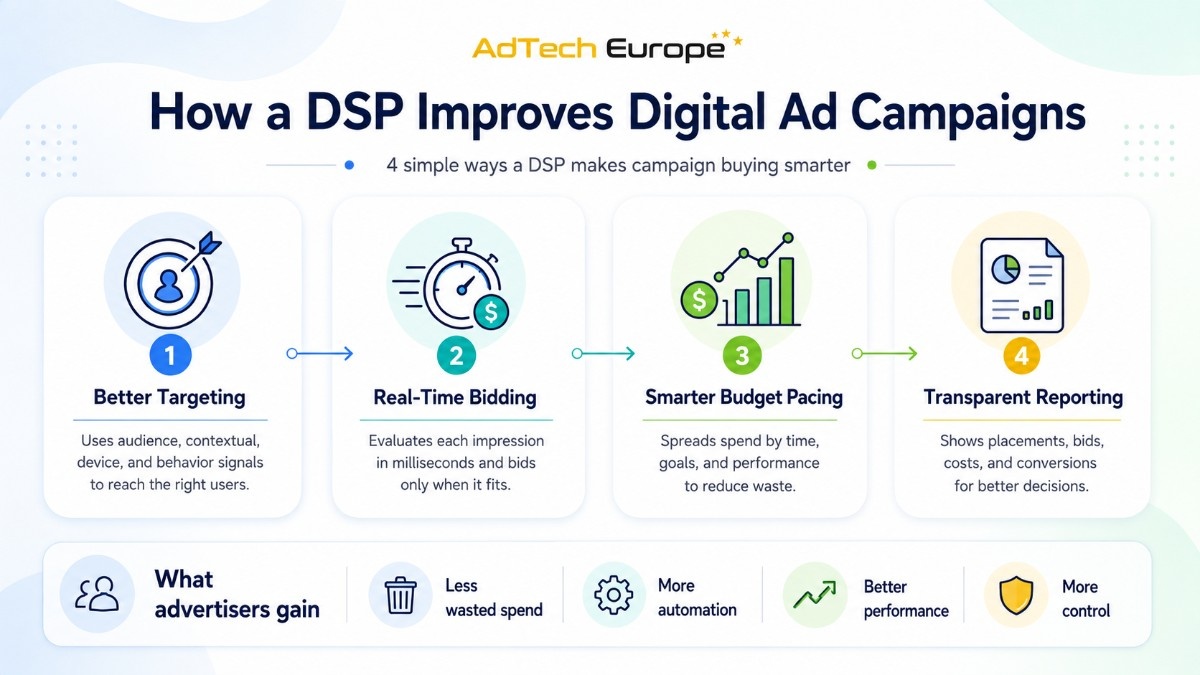
A DSP improves campaigns by making media buying more data-led, automated, and measurable. It does not just buy ads. It helps decide which impressions are worth buying.
In 2026, U.S. programmatic ad spending is forecast to top $200 billion, showing why advertisers need stronger DSP control, bidding, and optimization.
| Campaign challenge | How a DSP helps |
| Wasted spend | Filters low-quality or poor-fit impressions |
| Manual buying | Automates buying across many supply sources |
| Weak targeting | Uses audience, contextual, device, and behavior signals |
| Poor budget pacing | Spreads spend based on time, goals, and performance |
| Low transparency | Shows placement, bid, cost, and conversion data |
| Platform dependency | Gives buyers more control over media operations |
Core Benefits of DSP Marketing
Better Audience Targeting
DSPs allow advertisers to target users based on data signals such as location, device, interest, behavior, context, and first-party audience lists.
This helps reduce wasted impressions. Instead of showing ads to everyone, advertisers focus on people more likely to engage or convert.
Strong targeting also supports retargeting, lookalike modeling, and customer journey campaigns.
Real-Time Bidding Control
In DSP marketing, ads are often bought through real-time bidding. This means the DSP reviews an impression and decides whether to bid in milliseconds.
The bid can change based on:
- Audience value
- Placement quality
- Device type
- Time of day
- Conversion probability
- Campaign goal
- Floor price
Smart bidding is one reason advertisers use programmatic buying to improve ROI. A strong DSP should support flexible bidding logic, as explained in this guide on smart bidding strategies.
Improved Budget Efficiency
DSPs help advertisers control how budgets are spent. Instead of spending too fast or too slowly, the platform can pace spend across the campaign period.
Budget pacing helps avoid two common problems:
- Spending too much early before enough data is collected
- Underspending and missing campaign delivery goals
A good DSP can also shift budget toward better-performing audiences, placements, creatives, or supply paths.
Access to More Quality Inventory
DSP marketing gives advertisers access to digital ad inventory across many supply sources. This can include display, native, mobile in-app, video, and connected TV.
The quality of inventory matters. Advertisers need clean supply, strong integrations, and access to relevant placements. Reliable programmatic inventory access helps buyers expand reach while maintaining control over quality and performance.
Stronger Campaign Transparency
Transparency is one of the biggest reasons advertisers and agencies care about DSP ownership and control.
A transparent DSP can show:
- Where ads appeared
- What bid was placed
- Which SSP supplied the impression
- How much media cost was paid
- Which audiences performed
- Which creatives drove action
- Which placements wasted spend
This helps advertisers reduce hidden costs and improve performance over time.
Key DSP Features That Improve Performance
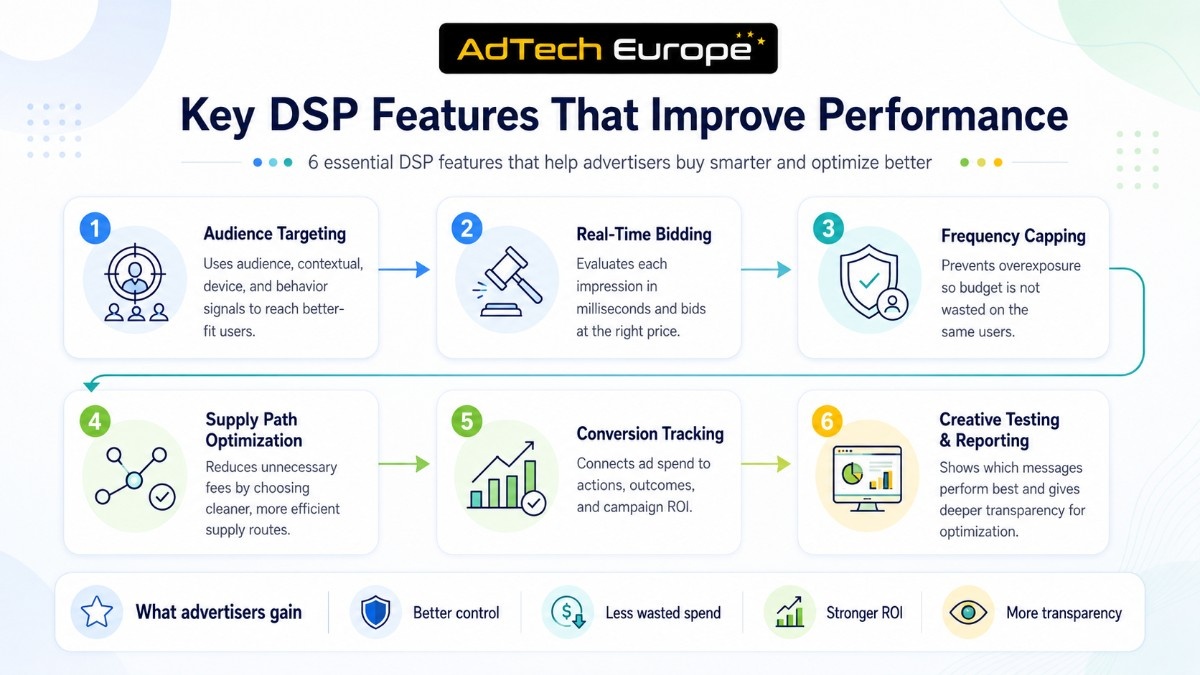
Not every DSP is equal. Some platforms only offer basic campaign setup. Others give deeper control over bidding, supply, data, and reporting.
| Feature | Why it matters |
| Real-time bidding engine | Helps buy impressions at the right price |
| Audience targeting | Improves relevance and conversion potential |
| Frequency capping | Prevents overexposure and wasted spend |
| Supply path optimization | Reduces unnecessary fees and poor supply routes |
| Conversion tracking | Connects ad spend to real business outcomes |
| Bid shading | Helps avoid overpaying in first-price auctions |
| Creative testing | Shows which messages perform best |
| Log-level reporting | Gives deeper transparency for optimization |
| White-label options | Supports agencies and DSP business owners |
| Custom bidding logic | Allows performance models built around business goals |
Advertisers evaluating platforms should look beyond basic access and focus on control, transparency, and scalability. These are the types of powerful DSP features that matter when campaigns grow.
How DSP Marketing Reduces Wasted Ad Spend
DSP marketing reduces wasted spend by improving how impressions are selected, priced, and measured.
A DSP can reduce waste through:
- Better audience filters
- Placement quality controls
- Brand safety rules
- Frequency caps
- Fraud detection signals
- Bid price control
- Supply path optimization
- Performance-based budget shifts
For advertisers focused on efficiency, the goal is not only to buy cheaper impressions. The goal is to buy better impressions at the right price. This is where DSP technology can help companies cut wasted spend while still scaling reach.
DSP Marketing for Agencies and Media Buyers
Agencies and media buyers often manage campaigns for many clients. That makes control, reporting, and margin visibility even more important.
A DSP helps agencies:
- Manage multiple campaigns from one system
- Apply consistent bidding rules
- Build reusable audience strategies
- Improve client reporting
- Protect media buying margins
- Reduce reliance on third-party platforms
For agencies that want more independence, owning or operating a DSP can be a stronger long-term move than renting access from closed platforms. This is why many agencies need DSP control to scale their programmatic business.
Using a DSP vs Owning a DSP
Many advertisers start by using a third-party DSP. This works well for basic access and fast campaign launch. But as spend grows, platform limits can become a problem.
| Option | Best for | Main limitation |
| Using a third-party DSP | Brands starting programmatic campaigns | Less control over fees, logic, and roadmap |
| White-label DSP | Agencies and networks building their own brand | Needs technical and supply support |
| Fully owned DSP | Businesses wanting full control and long-term scale | Requires infrastructure, integrations, and expertise |
A fully owned DSP gives more control over bidding logic, supply integrations, reporting, branding, and business model design. For teams comparing options, this programmatic DSP guide explains how platform ownership changes the way advertisers manage demand-side buying.
DSP Media Buying Workflow
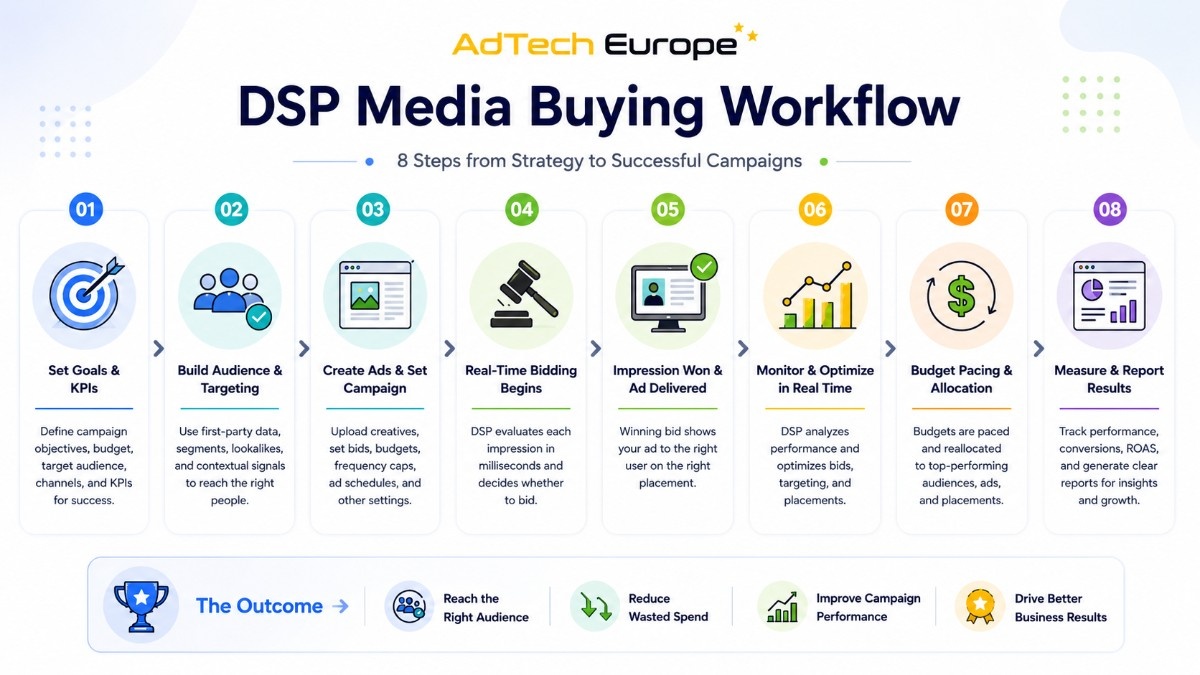
DSP media buying usually follows a simple flow:
- Set the campaign goal
- Define the target audience
- Choose inventory and supply sources
- Upload creatives
- Set bids, budget, and pacing rules
- Launch the campaign
- Track impressions, clicks, conversions, and cost
- Optimize based on performance data
This workflow helps media buyers move from guesswork to data-led buying. A clear DSP media buying process also makes it easier to scale campaigns across clients, markets, and channels.
Important KPIs in DSP Marketing
DSP campaign performance should be judged by business goals, not only clicks.
Key DSP marketing KPIs include:
- CPM: Cost per thousand impressions
- CPC: Cost per click
- CPA: Cost per acquisition
- CTR: Click-through rate
- CVR: Conversion rate
- ROAS: Return on ad spend
- Viewability: Share of ads actually seen
- Frequency: Average ad exposure per user
- Win rate: Share of auctions won
- eCPM: Effective revenue or cost per thousand impressions
The best KPI depends on the campaign. Awareness campaigns may focus on reach and viewability. Performance campaigns may focus on CPA, ROAS, and conversion quality.
Common DSP Marketing Mistakes
DSPs are powerful, but poor setup can still waste money.
Avoid these mistakes:
- Targeting audiences that are too broad
- Using weak conversion tracking
- Ignoring frequency caps
- Overbidding on low-value impressions
- Running too many creatives without testing
- Measuring clicks but not real outcomes
- Using too many supply paths without quality checks
- Depending fully on black-box optimization
A DSP should give control, not remove responsibility. Advertisers still need a clear strategy, clean data, strong creatives, and regular optimization.
When Should You Invest in DSP Marketing?
DSP marketing is a strong fit when you need:
- More control over ad buying
- Better audience targeting
- Access to programmatic inventory
- Transparent campaign reporting
- Scalable media buying operations
- Lower dependency on third-party ad platforms
- Custom bidding and optimization logic
It is especially useful for agencies, advertisers, ad networks, and media buyers that want to control more of the advertising value chain.
Ready to Own Your Programmatic DSP?
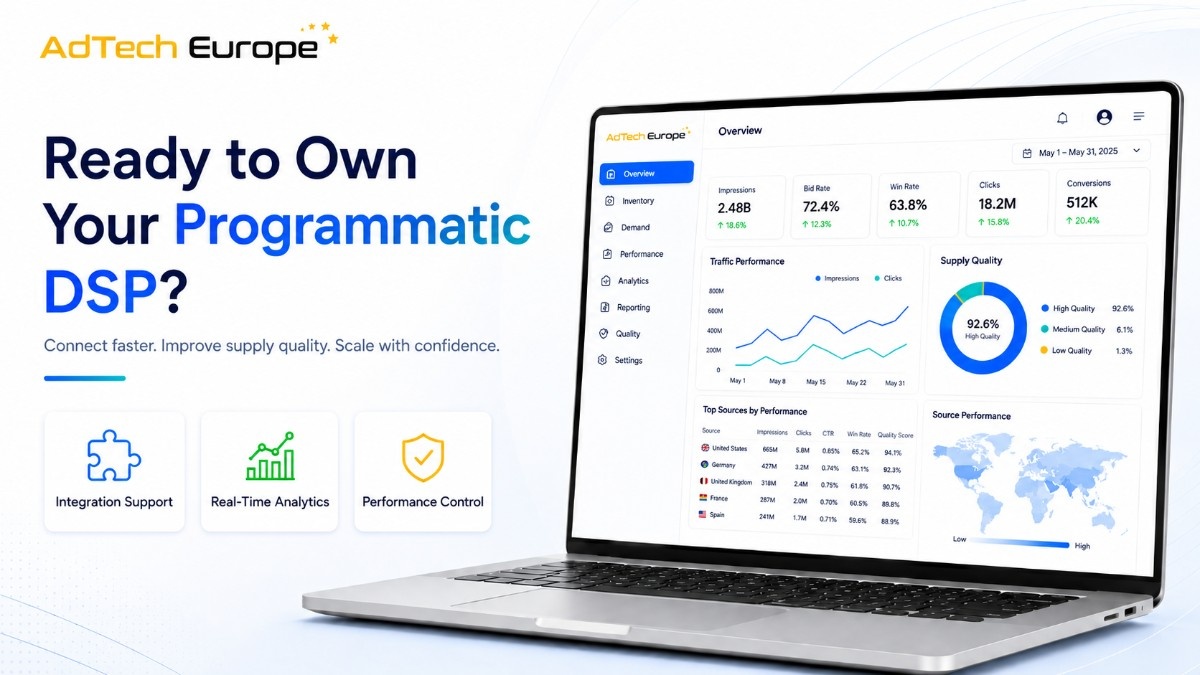
AdTech Europe helps advertisers, agencies, media buyers, ad networks, and DSP owners acquire a fully owned demand-side platform with source-code access, white-label branding, programmatic supply integrations, and scalable infrastructure. This allows you to launch your own DSP, reduce reliance on third-party platforms, and gain full control over bidding logic and revenue growth.
For teams needing more flexibility, AdTech Europe also offers custom DSP development tailored to your business model, along with the option to schedule a DSP strategy meeting to plan your next steps.
FAQs
Is DSP marketing only for large advertisers?
No. Large advertisers use DSPs often, but agencies, ad networks, and growing media buyers can also use DSP marketing to improve control, targeting, and performance.
What is the difference between DSP marketing and Google Ads?
Google Ads mainly buys within Google’s own ad network and partners. A DSP can connect to many ad exchanges, SSPs, and inventory sources across the open programmatic market.
Can a DSP help with retargeting?
Yes. A DSP can retarget users who visited a site, viewed products, clicked ads, or matched a first-party audience segment.
Does a DSP replace a media buyer?
No. A DSP supports the media buyer. It automates buying and optimization, but humans still set goals, review data, control budgets, and improve strategy.
What data does a DSP use?
A DSP may use first-party data, contextual signals, device data, location data, campaign performance data, and approved third-party or partner data.
How does a DSP improve ROAS?
A DSP can improve ROAS by bidding more on high-value impressions, reducing wasted spend, testing creatives, improving targeting, and shifting budget toward better-performing supply.
Is owning a DSP better than using one?
Owning a DSP can be better when you need full control over branding, margins, bidding logic, data, supply integrations, and long-term platform value.
What makes a DSP good for agencies?
A good agency DSP should support multi-client management, transparent reporting, white-label branding, flexible billing, custom optimization, and scalable campaign operations.