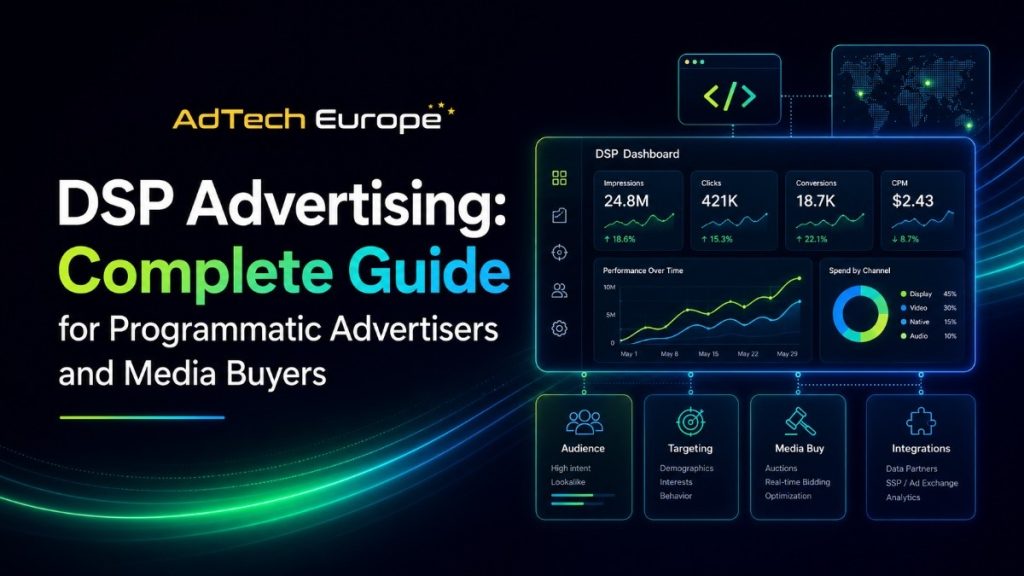
Programmatic media buying is no longer just about buying impressions at scale. Today, advertisers, agencies, and media buyers need sharper control over inventory, bidding, targeting, data, budget pacing, and campaign performance. This is where DSP advertising becomes a core growth tool. A demand-side platform helps buyers reach the right audience across multiple ad exchanges, SSPs, publishers, apps, and digital channels from one central system.
But using a DSP without real control can limit results. Many teams face hidden platform fees, unclear supply paths, limited reporting, fixed bidding logic, and dependency on third-party technology. For serious programmatic advertisers, DSP advertising is not only a way to run campaigns, it is a way to control media buying, improve efficiency, protect margins, and build a scalable advertising business with more transparency and ownership.
What Is DSP Advertising?
DSP advertising is the process of using a demand-side platform to buy digital ad inventory automatically across ad exchanges, SSPs, publishers, and inventory partners.
A DSP helps advertisers:
- Set campaign goals
- Choose audiences and geos
- Upload creatives
- Set budgets and bids
- Buy impressions in real time
- Track performance
- Optimize toward KPIs
In simple terms, a DSP is the buyer’s control center for programmatic advertising. It helps media buyers decide which impression is worth buying, how much to bid, and which ad to show.
Advertisers that want a deeper foundation should explore this programmatic DSP guide to understand the full buying process.
How DSP Advertising Works
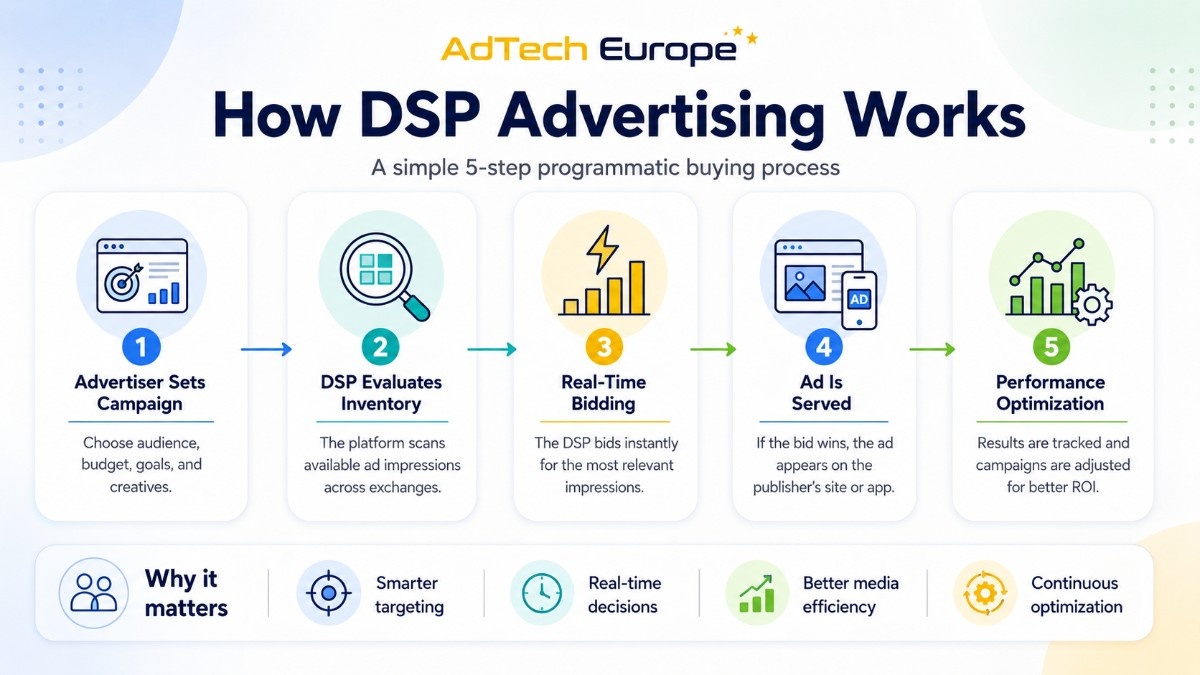
DSP advertising happens in milliseconds, but each step follows a clear and structured flow. Understanding these steps in DSP campaign planning helps advertisers make better decisions and improve campaign performance.
| Step | What Happens | Why It Matters |
| User visits a site or app | A user opens a webpage or mobile app that has ad space available | This creates an opportunity to show an ad to a real user in real time |
| SSP sends bid request | The SSP sends a request to multiple DSPs with details about the impression | Provides key data like device, location, format, user signals, and floor price |
| DSP receives and filters | The DSP checks if the impression matches campaign targeting rules | Filters out irrelevant traffic and avoids wasting budget |
| DSP evaluates the impression | The bidder analyzes value based on goals like clicks, conversions, or reach | Helps decide if the impression is worth bidding on |
| DSP calculates bid price | The system sets a bid based on budget, competition, and predicted performance | Ensures competitive bidding without overspending |
| DSP places a bid | The bid is submitted into the real-time auction | Competes with other advertisers for the same impression |
| Auction selects winner | The highest valid bid wins the auction | Determines which ad will be shown to the user |
| Winning ad is served | The ad is delivered instantly to the user’s screen | This is where the campaign actually reaches the audience |
| User interaction (optional) | The user may click, view, or ignore the ad | Provides engagement signals for performance tracking |
| Data returns to DSP | Performance data flows back into the DSP dashboard in real time | Enables optimization, budget shifts, and smarter future bidding |
This entire process is powered by real-time bidding (RTB), OpenRTB protocols, machine learning models, pacing algorithms, budget controls, and detailed reporting systems.
The more advanced the DSP technology, the better it can analyze impressions, adjust bids, and optimize campaigns automatically giving advertisers stronger control over performance, cost efficiency, and scale.
DSP vs SSP vs Ad Exchange
A DSP does not work alone. It connects with other parts of the programmatic ecosystem.
| Platform | Main User | Main Role |
| DSP | Advertisers and agencies | Buys ad inventory |
| SSP | Publishers and media owners | Sells ad inventory |
| Ad exchange | Buyers and sellers | Runs the auction |
| Ad server | Advertisers or publishers | Delivers and tracks ads |
| Data layer | Buyers and platforms | Improves targeting and measurement |
A clear view of the programmatic ecosystem roles helps advertisers avoid confusing buying tools with selling tools.
Main Benefits of DSP Advertising
DSP advertising gives media buyers more control than manual buying or direct publisher deals.
In 2026, U.S. programmatic display ad spend is expected to exceed $220 billion, making access to reliable programmatic ad inventory more important for advertisers that want scale, control, and stronger media efficiency.
Key benefits include:
- Faster buying across many sources
- Better audience targeting
- Real-time optimization
- Centralized campaign control
- Multi-format reach
- Better budget pacing
- Access to wider programmatic ad inventory
- Stronger performance tracking
For agencies, the biggest benefit is scale. One team can manage many advertisers, geos, offers, and traffic sources from one platform.
Important DSP Features Advertisers Should Check
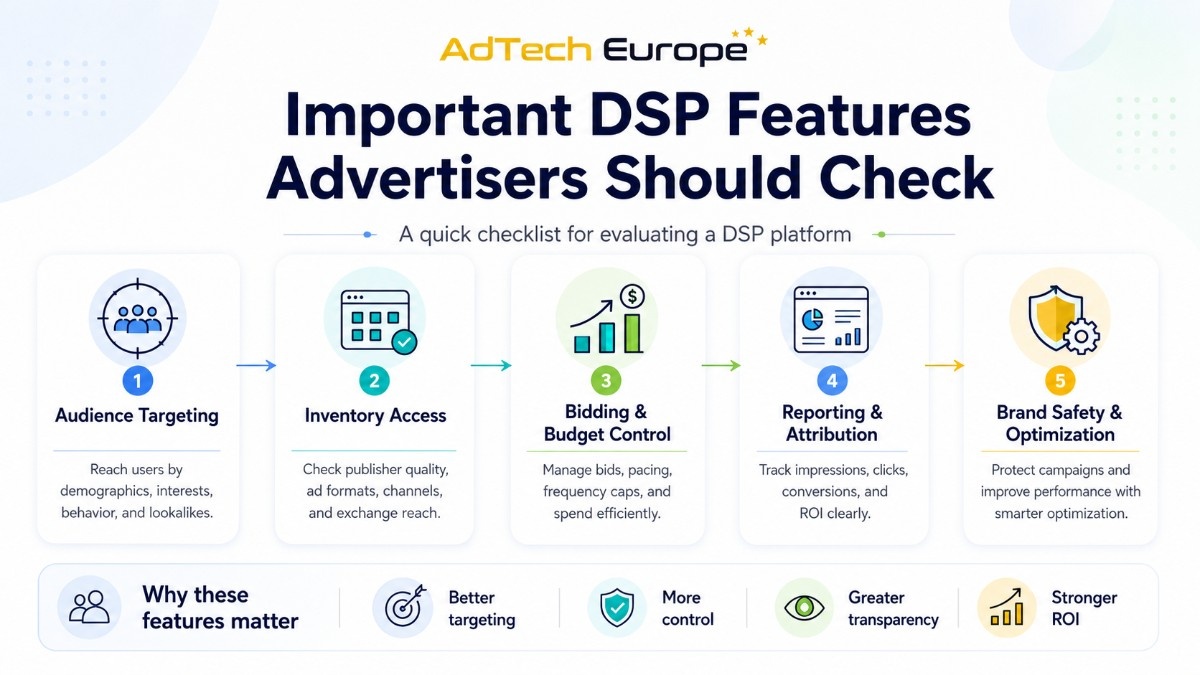
Not all DSPs are equal. A weak DSP may look simple but limit growth.
A strong DSP should include:
Core Buying & Optimization
- Real-time bidder
- Budget pacing
- Bid shading
- Frequency capping
Campaign & Creative Management
- Campaign manager
- Creative management
- Geo and device targeting
Data & Performance Tracking
- Conversion tracking
- Real-time analytics
- Custom reporting
Quality & Control
- Fraud protection
- Whitelist and blacklist control
Integrations & Scalability
- Supply integrations
- API access
Advanced buyers should also review the backend ad stack behind the platform, not only the dashboard.
DSP Advertising Use Cases
DSP advertising works for many types of buyers.
| Buyer Type | Main Use Case | Best DSP Need |
| Brand advertiser | Awareness and retargeting | Brand safety and reach |
| Performance buyer | CPA and ROAS campaigns | Bid control and conversion tracking |
| Agency | Manage many clients | Multi-account tools |
| Ad network | Add demand-side buying | Platform control |
| Affiliate team | Test offers across geos | Fast optimization |
| DSP owner | Build ad-tech revenue | Source code and integrations |
Media buyers that manage large budgets often need stronger DSP features because small limits can become expensive at scale.
Third-Party DSP Access vs Owning a DSP
Using a third-party DSP is easy at the start. You log in, launch campaigns, and use the platform’s existing tools. But you may not control the bidder, source code, supply routes, data storage, or roadmap.
Owning a DSP gives more control.
| Area | Third-Party DSP | Owned DSP |
| Branding | Limited | Full white-label control |
| Source code | Usually no access | Possible full access |
| Bidding logic | Fixed | Customizable |
| Data control | Shared or limited | Stronger ownership |
| Margins | Platform takes fees | More margin control |
| Integrations | Vendor controlled | Owner controlled |
| Business value | Campaign tool | Platform asset |
This is why many agencies now want to own their DSP instead of only renting access.
How DSP Advertising Improves Performance
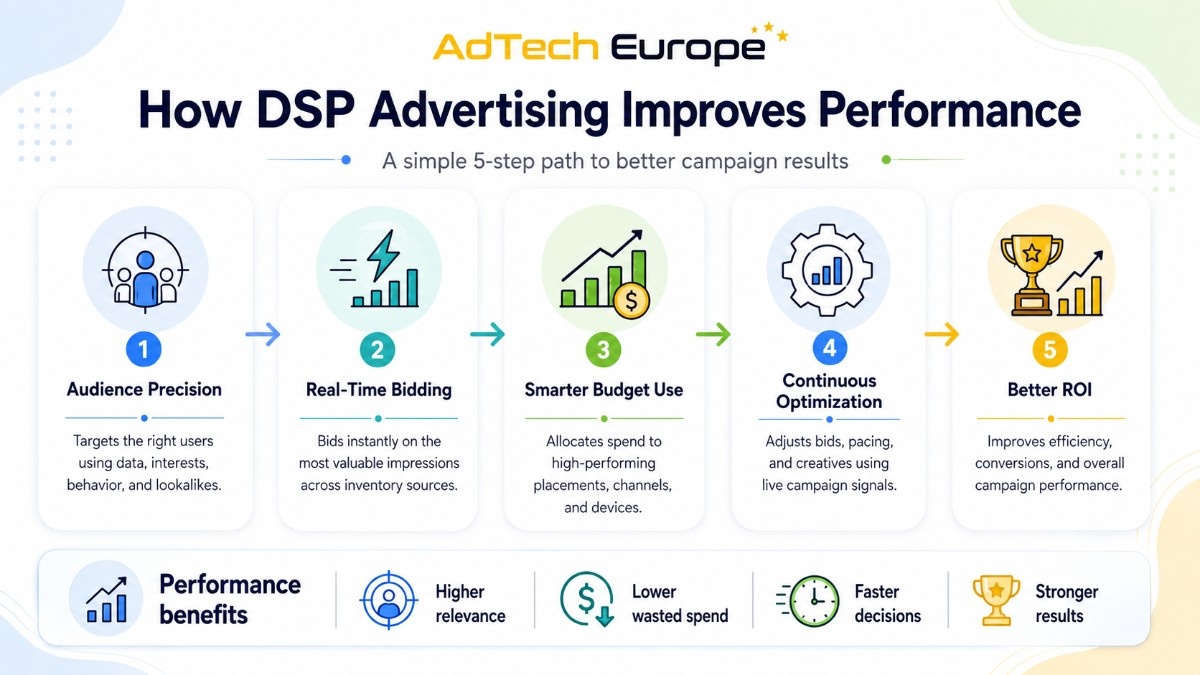
A DSP improves performance when it helps buyers make better decisions faster.
Performance comes from:
- Buying only impressions that match the campaign goal
- Adjusting bids based on conversion value
- Blocking poor placements
- Moving budget toward winning sources
- Using real-time analytics
- Testing creatives and audiences
- Reducing duplicate or low-quality supply paths
Supply path optimization is especially important. If the same impression appears through many SSPs, the DSP should help buyers choose the cleanest and most efficient route.
For serious buyers, the difference between access and control is clear when comparing DSP license models.
What to Look for Before Choosing a DSP
Before choosing a DSP, ask practical questions:
- Does it support your formats and geos?
- Can you access quality supply?
- Does it show real-time reporting?
- Can you control bids and pacing?
- Does it support first-party data?
- Can you block bad traffic sources?
- Is the fee model clear?
- Can the platform scale with your QPS?
- Can you customize features later?
Inventory quality matters as much as platform features. Even the best bidder needs access to reliable global traffic sources.
Ready to Own Your Programmatic DSP?
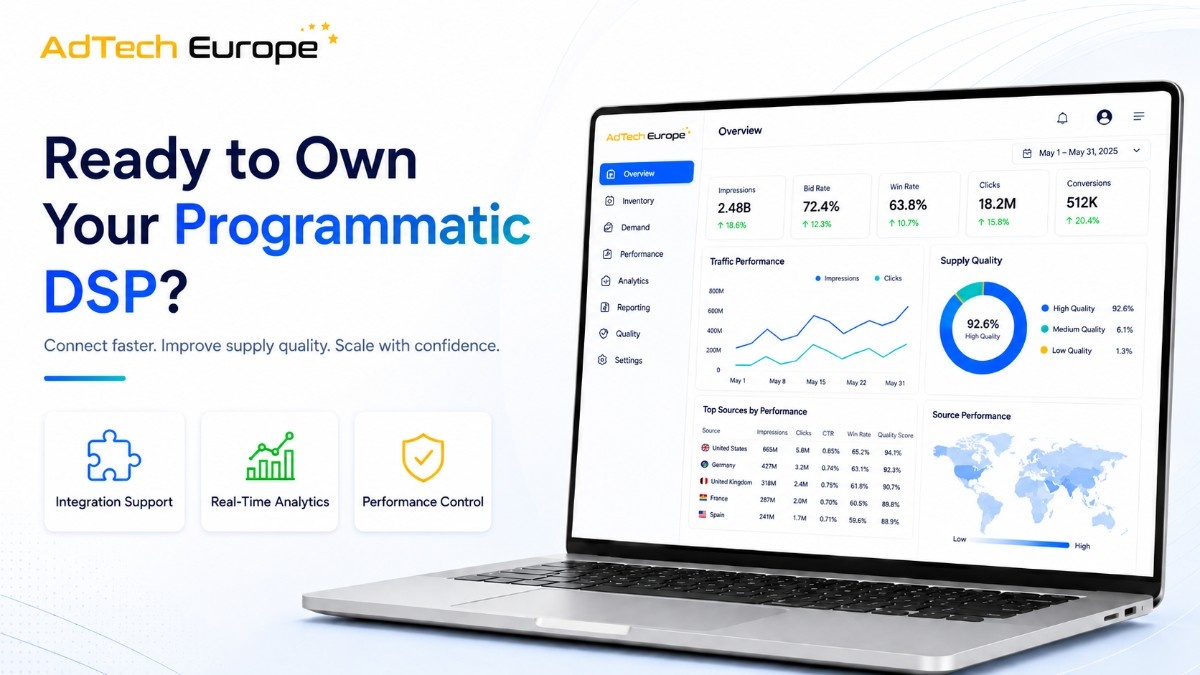
AdTech Europe helps advertisers, agencies, media buyers, and ad networks launch a fully owned demand-side platform with source-code access, white-label branding, programmatic integrations, and scalable infrastructure.
Whether you want to reduce reliance on third-party platforms, control bidding logic, or scale a long-term programmatic business, AdTech Europe provides the technology and ownership model to move forward with confidence. For tailored solutions, custom DSP development can align the platform with your strategy, and you can plan your next steps through a programmatic strategy meeting
FAQs
Is DSP advertising only for large advertisers?
No. Small advertisers can use DSPs, but DSP ownership is usually better for agencies, media buyers, ad networks, and teams buying at scale.
What is the main difference between DSP advertising and Google Ads?
Google Ads mainly buys within Google’s ecosystem. A DSP can buy inventory across many exchanges, SSPs, publishers, apps, and channels.
Can a DSP help reduce ad fraud?
Yes. A DSP can use fraud filters, domain controls, placement blocking, traffic scoring, and third-party verification integrations to reduce risk.
What KPIs should media buyers track in a DSP?
Track CPM, CPC, CTR, CPA, ROAS, win rate, conversion rate, viewability, spend, pacing, and source-level performance.
Do advertisers need first-party data for DSP advertising?
No, but first-party data improves targeting, retargeting, lookalike modeling, and privacy-safe audience activation.
Can agencies make money with their own DSP?
Yes. Agencies can earn from managed service fees, platform fees, media markups, advertiser accounts, and long-term platform ownership.
Is white-label DSP the same as full DSP ownership?
No. White-label DSP gives branding. Full ownership can include deeper control over source code, infrastructure, data, integrations, and bidding logic.
What makes DSP advertising hard to scale?
Common limits include poor inventory quality, weak reporting, low QPS, fixed bidder logic, hidden fees, limited fraud controls, and lack of technical ownership.