Programmatic buying can grow fast, but many advertisers hit the same wall. They spend more, test more traffic, and still depend on third-party DSP rules, hidden fees, limited data access, and vendor-controlled technology.
That creates a problem. Agencies, media buyers, ad networks, and ad-tech businesses want more control, but renting access to a DSP often limits how far they can scale. They may not control bidding logic, source data, platform branding, infrastructure, or long-term margins.
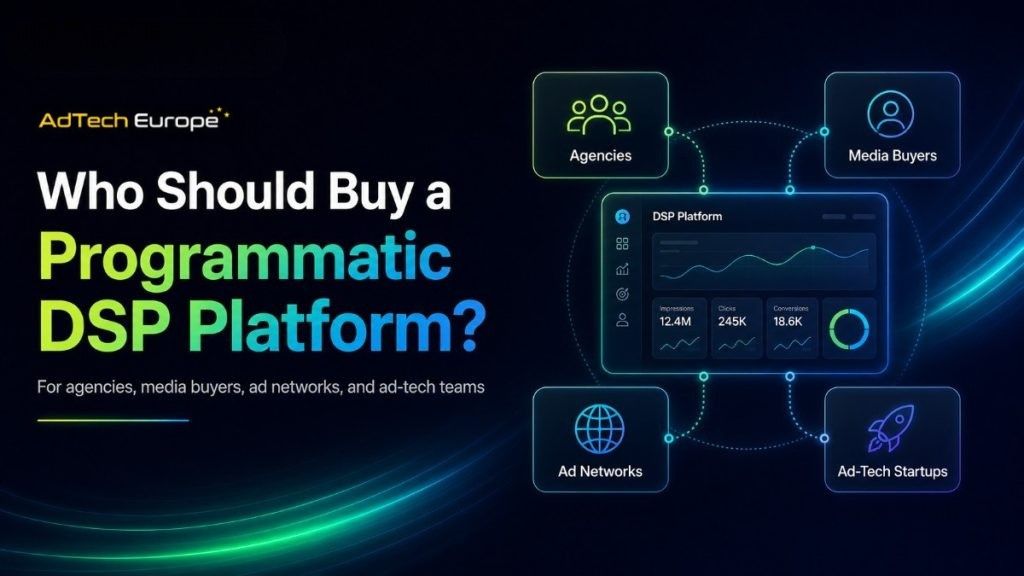
So, who should buy DSP platform technology? Buying a programmatic DSP platform makes sense when your business is ready to move from campaign access to platform ownership. It gives you more control over inventory, data, traffic quality, client accounts, optimization, and revenue structure.
Key Takeaways
- A DSP platform is best for businesses that buy media at scale or want to operate their own ad-tech platform.
- DSP ownership is different from DSP access because ownership gives deeper control over source code, infrastructure, data, and integrations.
- Agencies, ad networks, media buyers, affiliates, and DSP operators can benefit most from buying a platform.
- The right choice depends on budget, technical goals, inventory needs, team skills, and long-term growth plans.
What Does It Mean to Buy a DSP Platform?
Buying a DSP platform means acquiring the technology used to buy programmatic ad inventory across publishers, exchanges, SSPs, and supply partners.
A DSP lets buyers manage:
- Campaign setup
- Targeting
- Bidding
- Budgets
- Creatives
- Tracking
- Reporting
- Optimization
- Traffic source controls
- Client account access
With DSP platform acquisition, the goal is not just to run ads. The goal is to control the buying system behind the ads.
Businesses That Benefit Most From DSP Ownership
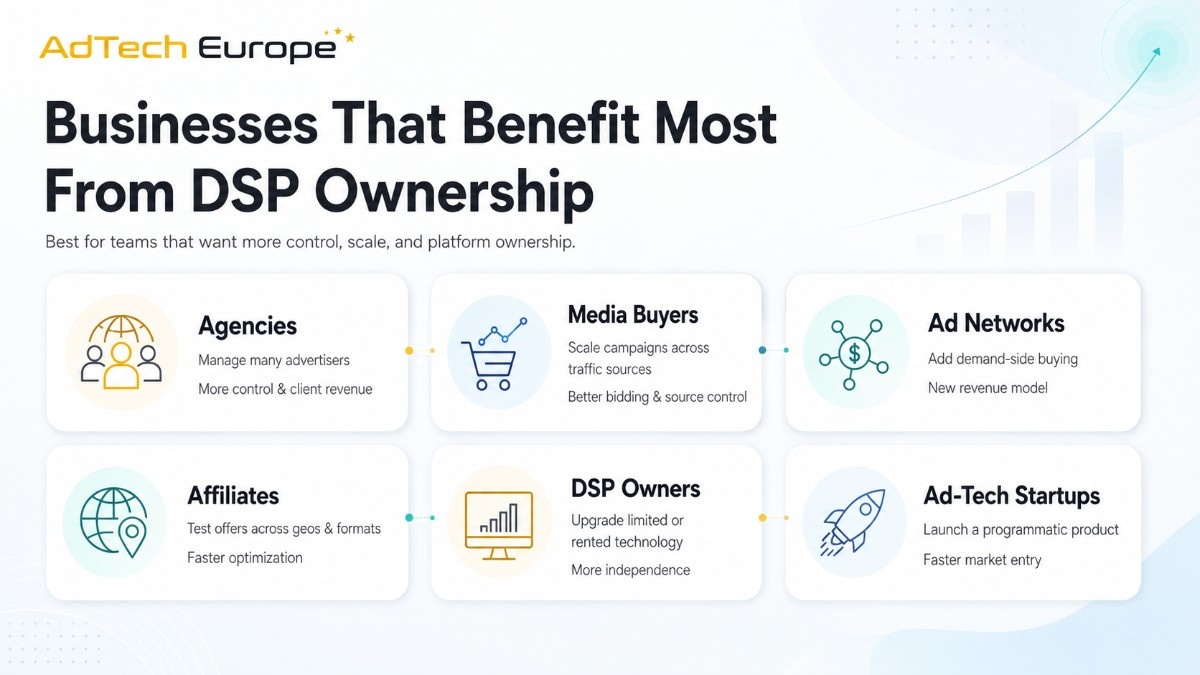
A programmatic DSP platform is not for every advertiser. It is best for businesses that already understand traffic buying or want to build a programmatic business around their own technology.
| Buyer Type | Why It Makes Sense | Main Benefit |
| Agencies | Manage many advertisers from one platform | More control and client revenue |
| Media buyers | Scale campaigns across traffic sources | Better bidding and source control |
| Ad networks | Add demand-side buying to their stack | New revenue model |
| Affiliates | Test offers across geos and formats | Faster optimization |
| DSP owners | Upgrade limited or rented technology | More independence |
| Ad-tech startups | Launch a programmatic product | Faster market entry |
Agencies That Want More Control
Agencies often start with third-party DSP access. This works at the beginning, but it can become limiting as client demand grows.
An agency should consider buying a DSP platform when it needs:
- Separate advertiser accounts
- White-label branding
- Client-facing dashboards
- Better margin control
- Custom reporting
- Direct supply integrations
- More control over bidding and optimization
For agencies moving beyond rented tools, full DSP control can turn programmatic buying into a stronger long-term business asset.
Media Buyers Running High-Volume Campaigns
Media buyers should consider DSP ownership when they spend enough that platform fees, limited data, and weak source visibility start hurting profit.
A DSP platform helps media buyers:
- Test more traffic sources
- Block weak placements
- Build whitelists
- Adjust bids by source
- Track CPA, CTR, win rate, and ROAS
- Control campaign pacing
- Reduce wasted spend
This matters most for performance campaigns where small improvements in bidding, traffic quality, and source selection can improve margins.
Ad Networks and Traffic Businesses
Ad networks can buy a DSP platform to expand from selling traffic to managing demand-side buying.
This is useful when the business wants to:
- Serve advertisers directly
- Connect to premium inventory
- Build a self-serve advertiser platform
- Offer managed campaign support
- Control demand sources
- Add programmatic buying features
For traffic businesses, programmatic media inventory becomes more valuable when it is connected to a platform that can manage targeting, bidding, reporting, and optimization.
DSP Ownership vs DSP Access
One of the biggest decisions is whether to own a DSP or only access one.
DSP access means you use another company’s platform. DSP ownership means the platform becomes your business asset.
| Area | DSP Access | DSP Ownership |
| Branding | Usually limited | Full brand control |
| Source code | No access | Possible full access |
| Data control | Platform-limited | Business-controlled |
| Integrations | Vendor-dependent | Customizable |
| Fees | Ongoing usage costs | Ownership-based model |
| Scaling | Limited by provider | Controlled by owner |
| Exit value | Low asset value | Higher technology value |
If long-term control is the goal, DSP ownership model is usually stronger than simple access.
How DSP Acquisition Works
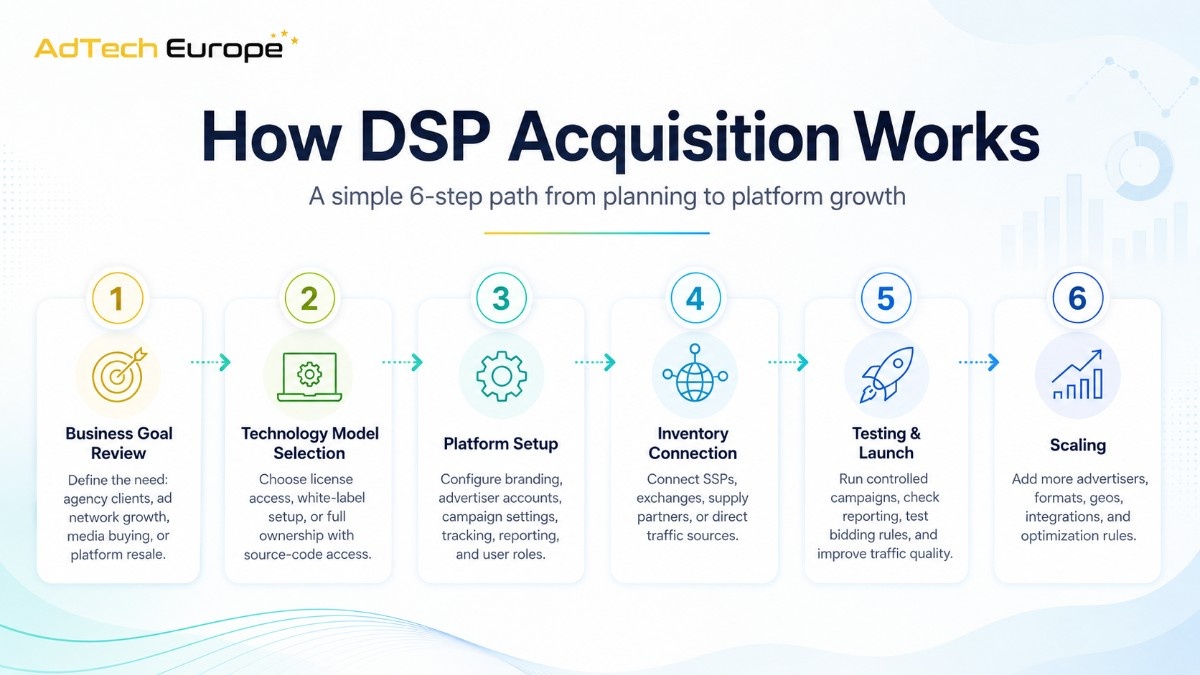
DSP acquisition is the process of buying or licensing programmatic technology so your business can operate its own demand-side platform.
A simple acquisition process usually includes:
- Business goal review
Define whether you need a DSP for agency clients, ad network growth, media buying, or platform resale. - Technology model selection
Choose between license access, white-label setup, or full ownership with source-code access. - Platform setup
Configure branding, advertiser accounts, campaign settings, tracking, reporting, and user roles. - Inventory connection
Connect supply partners, SSPs, exchanges, or direct traffic sources. - Testing and launch
Run controlled campaigns, check reporting, test bidding rules, and improve traffic quality. - Scaling
Add more advertisers, formats, geos, integrations, and optimization rules.
A clear acquisition workflow helps buyers avoid delays, unclear ownership terms, and weak launch planning.
DSP Acquisition Checklist
Before buying a DSP platform, review the main business, technical, and operational points.
| Checklist Area | What to Check |
| Ownership model | License, white-label, or full source-code ownership |
| Source code | Is code access included or restricted? |
| Inventory | Which SSPs, exchanges, and traffic sources can connect? |
| Ad formats | Display, native, video, push, pop, mobile, or custom formats |
| Targeting | Geo, device, OS, browser, language, app, site, source |
| Reporting | Spend, clicks, CTR, conversions, CPA, ROAS, win rate |
| Fraud controls | Bot filters, blocklists, source review, quality controls |
| Scalability | Server load, traffic volume, bid request capacity |
| Customization | Branding, UI, APIs, bidding logic, user roles |
| Support | Setup help, technical support, custom development |
A detailed DSP buying checklist is useful before comparing vendors or signing an acquisition agreement.
When Full Source-Code Ownership Makes Sense
Full source-code ownership is best for businesses that want deep control over the platform.
It is useful when you need to:
- Modify bidding logic
- Build custom features
- Control infrastructure
- Add private integrations
- Create unique optimization tools
- Avoid long-term vendor lock-in
- Build a sellable technology asset
Buying a DSP with source code is usually a better fit for serious ad-tech operators than for small advertisers with limited technical plans.
When DSP Ownership May Not Be Right
DSP ownership is powerful, but it is not always the right move.
It may not be the best fit if:
- You run small campaigns only
- You do not need platform control
- You have no plan to scale
- You lack a traffic or client strategy
- You only need managed service
- Your team cannot handle platform operations
In that case, using an existing DSP, managed service, or white-label model may be enough.
What to Look for Before Buying a DSP Platform
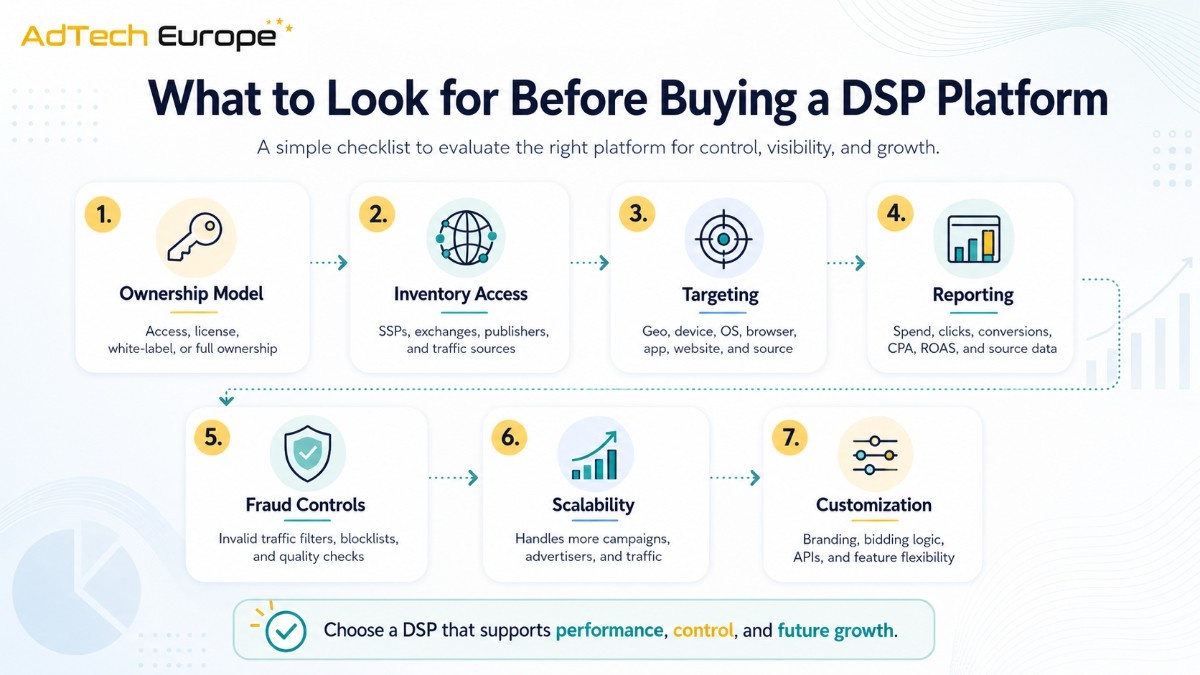
Before buying a DSP platform, check whether it gives your business enough control, visibility, and room to grow. A good DSP should support campaign performance, not just provide inventory access.
| Area | What to Check |
| Ownership model | Access, license, white-label, or full ownership |
| Inventory access | SSPs, exchanges, publishers, and traffic sources |
| Targeting | Geo, device, OS, browser, app, website, and source |
| Reporting | Spend, clicks, conversions, CPA, ROAS, and source data |
| Fraud controls | Invalid traffic filters, blocklists, and quality checks |
| Scalability | Ability to handle more campaigns, advertisers, and traffic |
| Customization | Branding, bidding logic, APIs, and feature flexibility |
How to Choose the Right DSP Model
The right DSP model depends on how much control your business needs.
| Business Goal | Best DSP Model |
| Launch fast with lower setup work | White-label DSP |
| Run campaigns under your brand | Licensed DSP |
| Build long-term ad-tech asset | Full ownership |
| Customize bidding and features | Source-code ownership |
| Add supply and client accounts | Owned or licensed DSP |
| Test programmatic buying only | Third-party DSP access |
A license or ownership decision should be based on control, budget, technical skill, and growth plans.
Ready to Own Your Programmatic DSP?
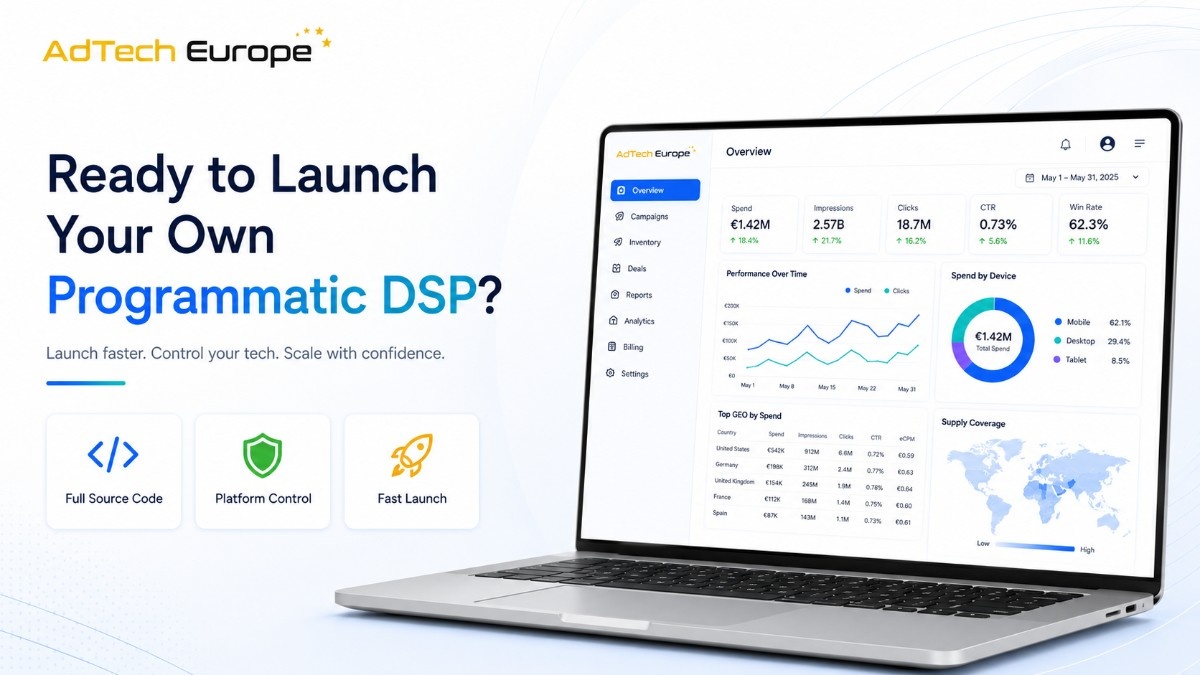
AdTech Europe helps advertisers, agencies, media buyers, ad networks, and DSP owners acquire a programmatic DSP platform with ownership-focused technology, white-label branding, supply integrations, scalable infrastructure, and source-code options.
Whether you want to launch your own DSP business, reduce dependence on third-party platforms, control bidding logic, improve traffic buying, or build long-term programmatic revenue, AdTech Europe gives you the platform structure and support needed to operate your own DSP with confidence.
FAQS
1. Who should buy a DSP platform first?
Agencies, media buyers, ad networks, and ad-tech companies should buy a DSP platform when they need more control over buying, data, branding, and revenue.
2. Is buying a DSP better than using a third-party DSP?
It is better when you need ownership, custom features, better margins, and long-term control. For small campaigns, third-party DSP access may be enough.
3. Do I need technical knowledge to own a DSP?
You need some operational understanding, but you do not always need an in-house engineering team if setup, support, and custom development are included.
4. What is the biggest benefit of DSP ownership?
The biggest benefit is control. You can control branding, data, bidding logic, integrations, traffic sources, and platform growth.
5. Can an agency use an owned DSP for multiple clients?
Yes. Agencies can create client accounts, manage campaigns, control permissions, and build a branded programmatic service.
6. What should I check before buying a DSP?
Check ownership terms, source-code access, inventory connections, ad formats, targeting, reporting, fraud controls, scalability, and support.
7. Is source-code ownership always required?
No. Source-code ownership is best for businesses that need deep customization, long-term independence, or a technology asset.
8. Can DSP ownership help reduce wasted ad spend?
Yes. Better source controls, bid rules, reporting, blocklists, and traffic quality tools can help reduce spend on weak or low-quality inventory.