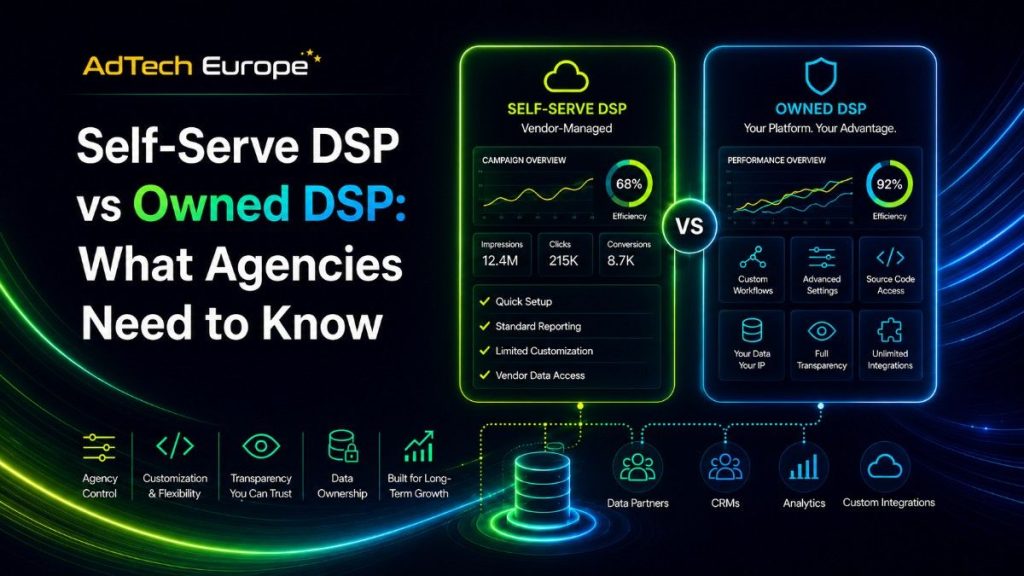
Many agencies start programmatic buying with a self-serve DSP because it feels simple. You get access to a platform, set up campaigns, choose targeting, manage bids, and track results from one dashboard.
But as your agency grows, the limits can become clear. You may have less control over fees, inventory, bidding logic, reporting, data access, and platform branding. This can make it harder to protect margins, improve performance, and build long-term value for your business.
That is why the self serve DSP vs owned DSP decision matters. It is not only about how you buy media today. It is about how much control your agency wants over technology, supply, data, revenue, and future programmatic growth.
Self-Serve DSP vs Owned DSP: Quick Comparison
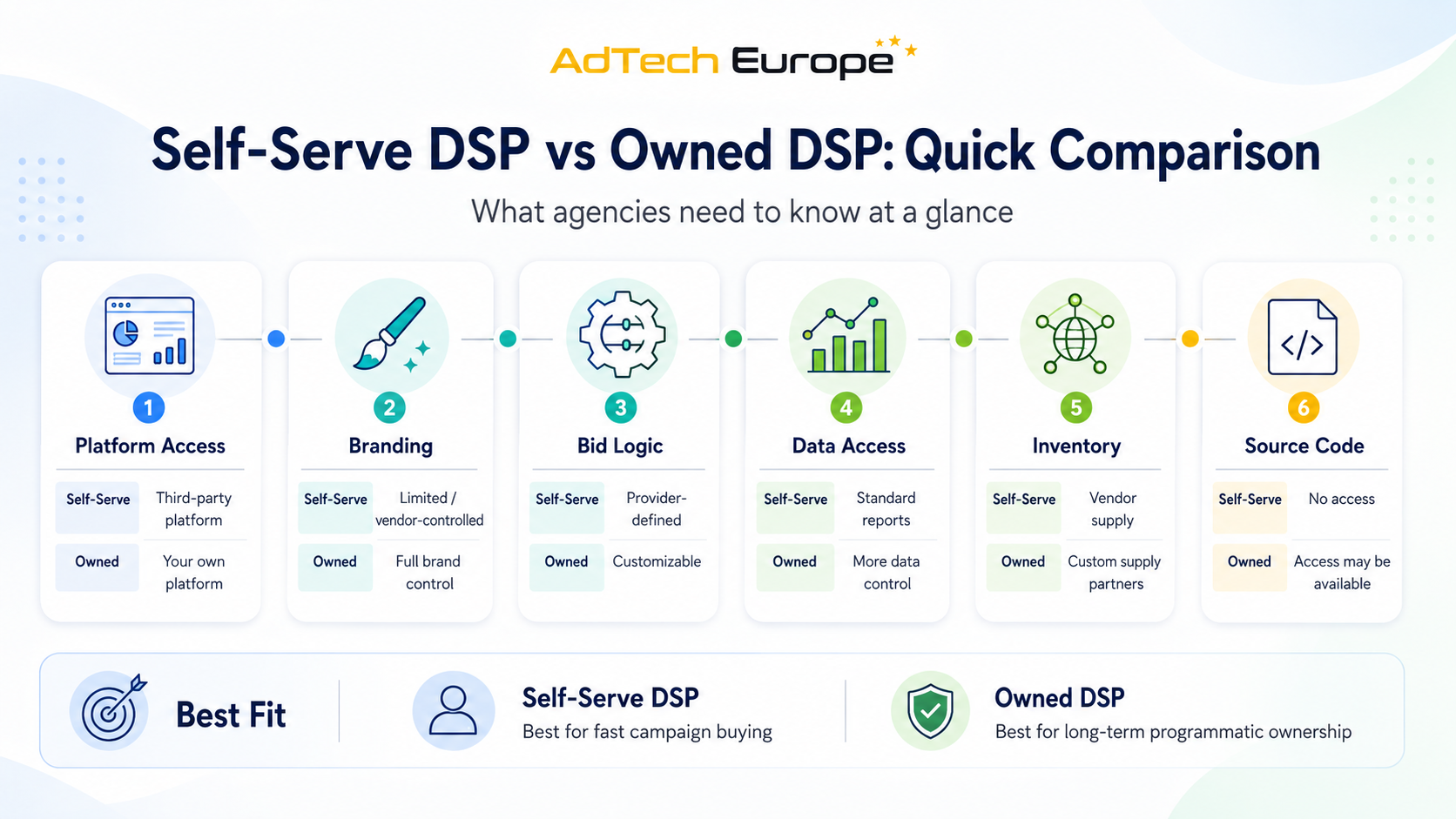
A self-serve DSP gives your team access to a third-party platform. An owned DSP gives your business control over the platform, technology, integrations, data, and operating model.
| Area | Self-Serve DSP | Owned DSP |
| Platform access | Login to a third-party system | Operate your own platform |
| Branding | Limited or vendor-controlled | Full brand control |
| Source code | No source-code access | Source-code access may be available |
| Bid logic | Set by the DSP provider | Can be customized |
| Data access | Limited to platform reports | More control over data and reports |
| Inventory | Based on vendor supply | Can connect custom supply partners |
| Margins | Fees and markups depend on vendor | More control over platform economics |
| Best for | Fast campaign buying | Long-term programmatic ownership |
For agencies that want more than platform access, full DSP acquisition can create more control over technology, supply, and long-term revenue.
What Is a Self-Serve DSP?
A self-serve DSP is a demand-side platform where advertisers, agencies, and media buyers manage campaigns directly.
Your team can usually:
- Upload creatives
- Set campaign budgets
- Choose targeting options
- Select ad formats
- Adjust bids
- Monitor reports
- Optimize performance
The platform provider owns and operates the technology. Your agency uses the dashboard to buy media.
When a Self-Serve DSP Makes Sense
A self-serve DSP can be useful when your agency needs fast access to programmatic buying without building or managing technology.
It works well when:
- You are testing programmatic campaigns
- Your team is small
- You do not need custom bidder logic
- Standard reports are enough
- You prefer vendor-managed infrastructure
- Your media spend is still growing
The main benefit is speed. The main limit is control.
What Is an Owned DSP?
An owned DSP is a demand-side platform your business controls. Depending on the setup, ownership may include the platform interface, bidder, reporting layer, infrastructure, integrations, and source code.
This is different from simply using another company’s dashboard. With ownership, your agency can shape how the platform works, how campaigns are managed, how data is reported, and how supply is connected.
Agencies that want deeper independence often compare platform access with true DSP ownership before choosing a model.
What Agencies Can Control With an Owned DSP
An owned DSP gives agencies more control over how the platform works, how campaigns are managed, and how programmatic revenue is built.
This control matters more in 2026, as EMARKETER reports that US programmatic ad spending will top $200 billion this year, making platform control more important for agencies that manage larger media budgets.
With an owned DSP, agencies can control:
- Platform branding
- Client accounts
- User permissions
- Bid rules
- Optimization logic
- Inventory integrations
- Reporting structure
- Data ownership
- Fee structure
- Product roadmap
This matters when your agency wants to move from buying media on someone else’s platform to building its own programmatic business.
The Real Difference: Access vs Ownership
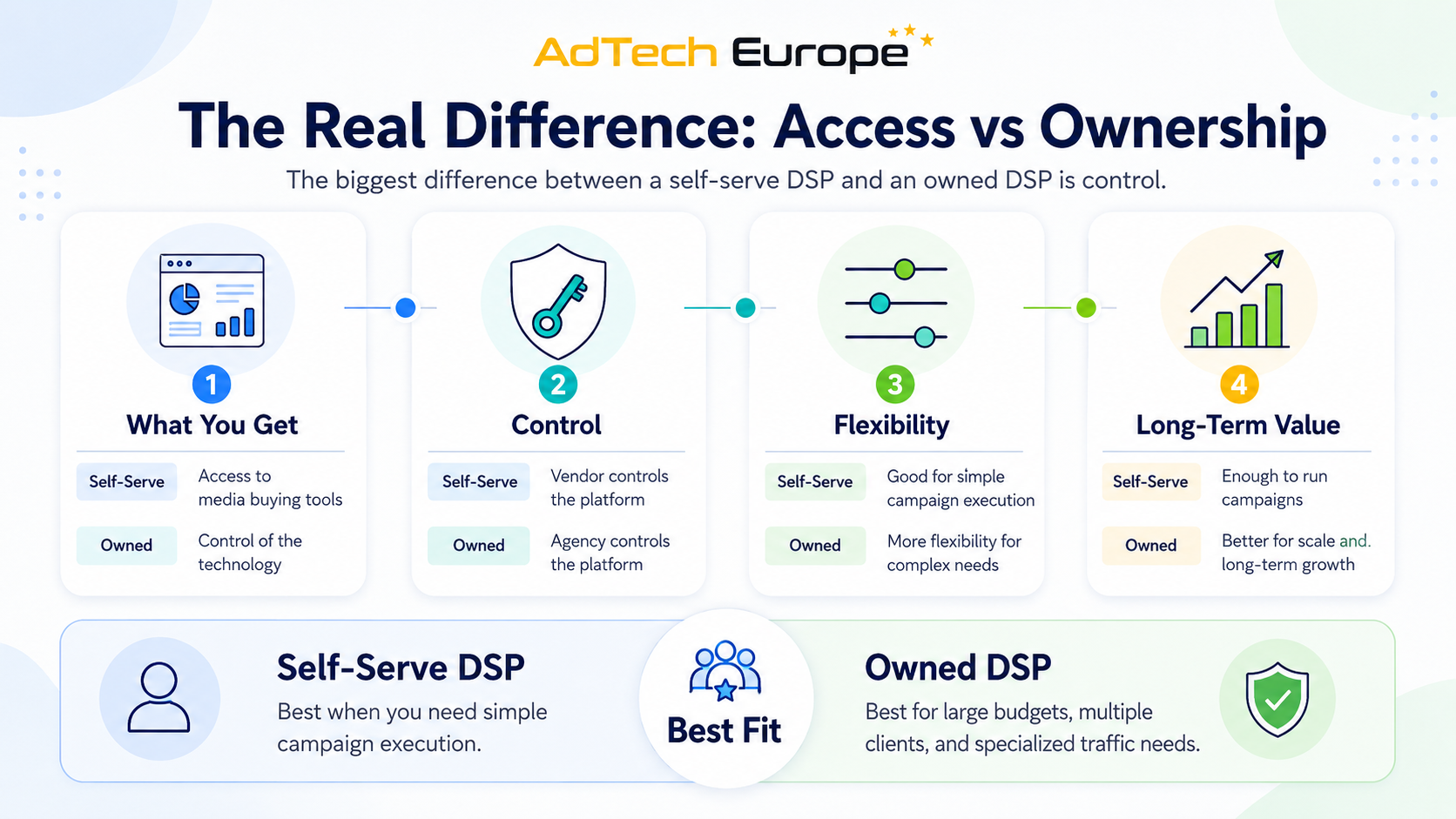
The biggest difference between a self-serve DSP and an owned DSP is control.
A self-serve DSP gives you access to media buying tools.
An owned DSP gives you control over the technology behind those tools.
For simple campaign execution, self-serve access may be enough. For agencies that manage large budgets, multiple clients, or specialized traffic needs, ownership can offer more flexibility and long-term value.
| Decision Point | Self-Serve DSP | Owned DSP |
| Campaign launch | Faster to start | Requires setup and onboarding |
| Custom features | Limited | More flexible |
| Client-facing platform | Usually limited | Can be branded for clients |
| Supply control | Vendor-defined | Custom SSP and exchange options |
| Reporting | Standard reports | Custom reporting possible |
| Business value | No owned technology asset | Builds platform value |
| Long-term scale | Depends on vendor | More independent growth |
Benefits of a Self-Serve DSP
A self-serve DSP is often the easiest way to start buying programmatic media.
Key benefits include:
- Simple campaign setup
- Lower technical responsibility
- Faster onboarding
- Built-in reporting
- Vendor support
- Access to existing supply
- No need to manage platform infrastructure
This makes self-serve platforms useful for smaller agencies, in-house marketing teams, and advertisers that need a quick buying solution.
Limits of a Self-Serve DSP
Self-serve DSPs can become restrictive as your agency grows.
Common limits include:
- Less control over platform fees
- Limited access to log-level data
- No source-code control
- Limited customization
- Restricted bidder logic
- Vendor-controlled supply access
- Standard reporting templates
- Less control over client-facing experience
These limits can affect margins, transparency, and campaign performance.
If your agency is already running steady programmatic budgets, a clear DSP buying checklist can help you review whether ownership is the next step.
Benefits of an Owned DSP
An owned DSP gives agencies more power over how programmatic buying works.
Key benefits include:
- Stronger control over technology
- Better margin flexibility
- Custom bidding logic
- Branded client experience
- More flexible inventory access
- Deeper reporting options
- More control over data
- Long-term platform value
An owned DSP can also help agencies create a stronger market position. Instead of offering only campaign management, the agency can offer a technology-backed programmatic solution.
Why Source-Code Access Matters
Source-code access is one of the biggest differences between basic DSP access and full ownership.
Programmatic is now a core part of digital advertising, with EMARKETER forecasting that about 90% of global display ad budgets will run programmatically in 2026, which makes control over bidding, reporting, integrations, and data logic much more important for agencies that depend on programmatic buying.
With source-code access, your business may be able to:
- Customize platform features
- Adjust bidder logic
- Build custom reporting
- Add new integrations
- Improve platform workflows
- Reduce dependence on one vendor
- Audit how the technology works
This is important for agencies that want more than a rented dashboard. A source-code DSP gives more room to build, adapt, and control the platform over time.
Inventory Access Is a Major Decision Factor
A DSP is only useful if it can access the right programmatic inventory.
Agencies should review:
- SSP integrations
- Ad exchange access
- Direct publisher options
- Private marketplace deals
- Geo coverage
- Device coverage
- Display, video, native, and mobile formats
- Traffic filtering
- Fraud detection
- Brand safety controls
Quality inventory helps reduce wasted spend and improves campaign results. For agencies that need scalable supply, programmatic media access should be part of the DSP evaluation from the start.
Owned DSP vs White Label DSP
A white label DSP gives your agency a branded version of an existing platform. It can be useful when you want a faster launch and do not need deep technical control.
An owned DSP goes further. It can give your business more control over technology, data, integrations, and platform development.
| Model | Best For | Main Limit |
| Self-serve DSP | Fast media buying | Limited control |
| White label DSP | Branded platform access | Vendor dependency |
| Owned DSP | Long-term control and scale | Requires stronger planning |
Agencies comparing these options should understand the difference between white label access and deeper ownership before making a decision.
When Should an Agency Move From Self-Serve to Owned DSP?
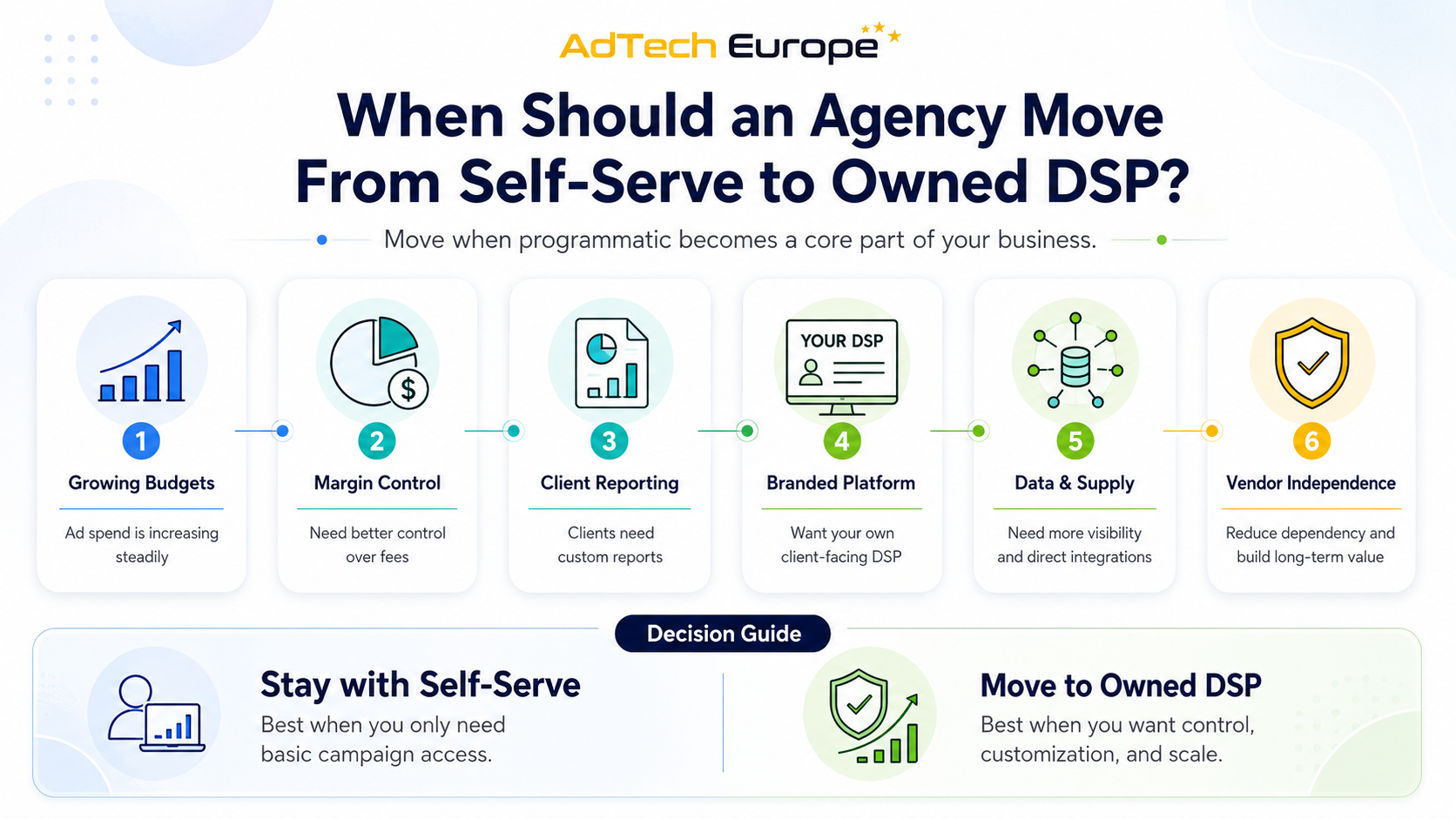
An agency should consider moving to an owned DSP when programmatic buying becomes a core part of the business.
Strong signs include:
- You manage growing ad budgets
- You want better margin control
- You need custom reporting for clients
- You want your own branded platform
- You need direct supply integrations
- You want more data visibility
- You want to reduce vendor dependency
- You plan to build an ad-tech product or platform business
If your team only needs basic campaign access, self-serve can still work. If your team wants control, customization, and long-term value, ownership may be the better path.
How Agencies Should Evaluate DSP Ownership
Before buying or acquiring a DSP, agencies should review both business and technical factors.
| Evaluation Area | What to Check |
| Technology | Source code, bidder, infrastructure, scalability |
| Inventory | SSPs, exchanges, PMPs, direct supply options |
| Data | Reporting, log-level access, conversion tracking |
| Operations | Campaign setup, user roles, workflow |
| Compliance | Privacy, consent, fraud protection, brand safety |
| Commercial model | Licensing, ownership rights, support, costs |
| Growth plan | Client use, reseller model, platform roadmap |
The right DSP model should match your agency’s goals, not just your current campaign needs.
Which Model Is Best for Your Business?
Choose a self-serve DSP if you need fast campaign access, simple tools, and lower technical responsibility.
Choose an owned DSP if you want more control over technology, data, inventory, margins, and long-term platform value.
For many agencies, the decision comes down to one question:
Do you only want to buy media, or do you want to own the system that powers your media buying?
Ready to Own Your Programmatic DSP?
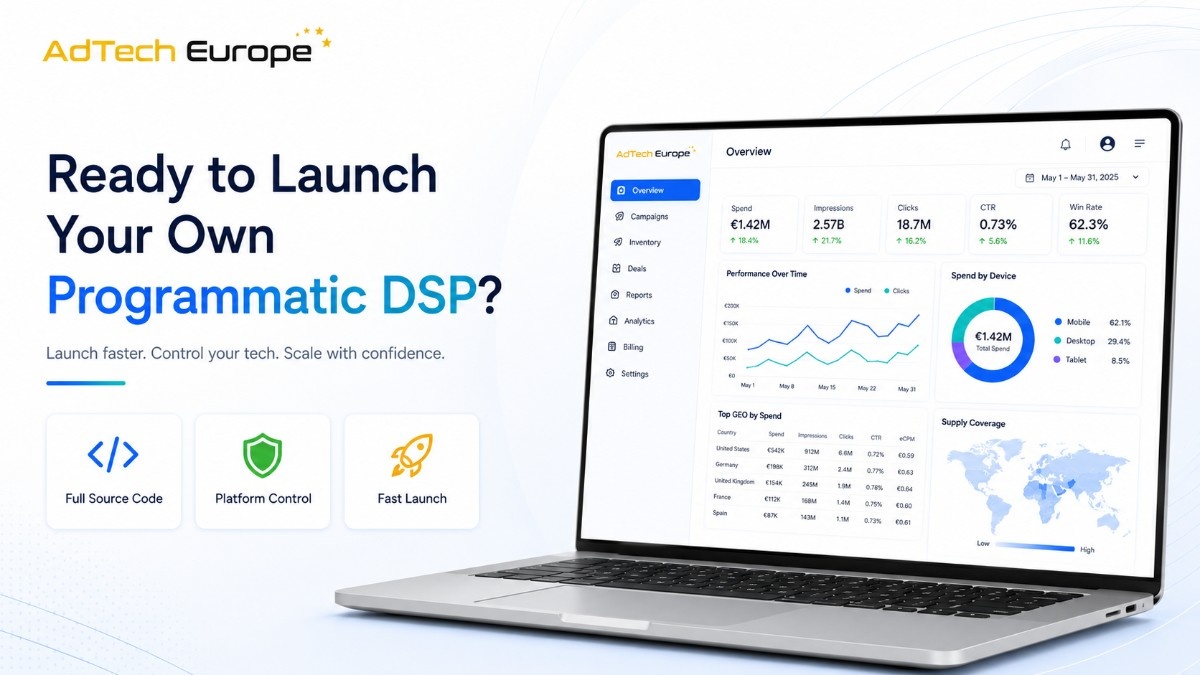
AdTech Europe helps advertisers, agencies, media buyers, ad networks, and DSP owners acquire a fully owned demand-side platform with source-code access, white-label branding, programmatic supply integrations, and scalable infrastructure.
Whether you want to launch your own DSP business, reduce dependence on third-party platforms, control your bidding logic, or build long-term programmatic revenue,connect with AdTech Europe for the technology, integrations, transparency, and ownership needed to operate your own DSP with confidence.
FAQs
1. Is a self-serve DSP the same as an owned DSP?
No. A self-serve DSP gives you access to a third-party platform. An owned DSP gives your business control over the platform, technology, data, and integrations.
2. Is DSP ownership only for large agencies?
No. DSP ownership is useful for any agency with steady demand, programmatic knowledge, and a clear plan to scale media buying or platform services.
3. Do I need a technical team to own a DSP?
Not always. It depends on the ownership model. A technical team or development partner is helpful if you want deep customization, new integrations, or source-code changes.
4. Can an owned DSP connect to premium inventory?
Yes. An owned DSP can connect to SSPs, ad exchanges, private marketplaces, and direct supply partners if the platform supports those integrations.
5. Does owning a DSP improve campaign performance automatically?
No. Ownership gives more control, but performance still depends on strategy, data, inventory quality, bid logic, creative quality, and optimization.
6. What is the biggest risk of staying with only self-serve DSPs?
The biggest risk is dependency. Your agency depends on the vendor for pricing, reporting, features, data access, inventory, and platform rules.
7. What should I check before acquiring a DSP?
Check source-code rights, infrastructure, bidder logic, reporting, SSP integrations, data access, fraud protection, support terms, and total ownership cost.
8. Can an agency use both self-serve and owned DSP models?
Yes. Some agencies use self-serve platforms for testing or extra reach while building their owned DSP for long-term control and scale.