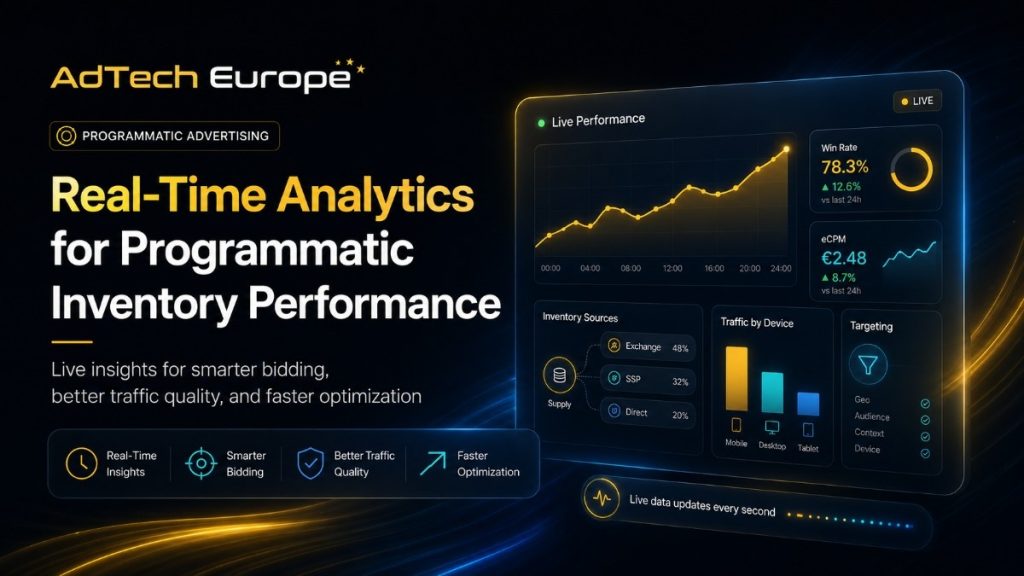
Programmatic inventory moves fast. Every impression, bid, click, source, device, and placement can change campaign performance in seconds. Without real-time inventory analytics, advertisers often find problems only after the budget has already been wasted.
The problem is not just buying traffic. The real problem is knowing which inventory is worth buying, which sources should be blocked, and which segments can scale. Slow reporting makes media buyers react late, especially in competitive RTB auctions.
Real-time inventory analytics gives advertisers, agencies, DSP owners, and ad-tech teams live visibility into inventory performance. It helps teams improve traffic quality, adjust bids, reduce invalid traffic, and make faster buying decisions across programmatic campaigns.
Key Takeaways
- Real-time analytics shows how programmatic inventory performs while campaigns are still live.
- Advertisers can track impressions, clicks, CTR, conversions, CPA, win rate, spend, and source quality.
- DSPs and media buyers use live data to adjust bids, budgets, placements, targeting, and supply paths.
- Strong analytics helps reduce wasted spend, improve traffic quality, and scale better-performing inventory.
- AdTech Europe supports advertisers and DSP owners with programmatic access, real-time insights, and quality-focused supply controls.
What Is Real-Time Analytics in Programmatic Advertising?
Real-time analytics is the live tracking of campaign and inventory data while programmatic ads are running. It helps advertisers see what is happening now, instead of waiting for delayed reports.
In programmatic advertising, every impression is bought through fast automated decisions. When buyers connect campaigns to ready ad supply, real-time analytics shows whether those decisions are helping the campaign reach the right users, control costs, and improve results.
How It Works in Practice
- The campaign starts collecting live data
The DSP tracks impressions, clicks, spend, conversions, and traffic sources as users interact with ads. - The data is grouped by performance signals
Advertisers can review results by geo, device, operating system, browser, app, site, placement, or supply partner. - The buyer uses the data to improve the campaign
Strong sources can get more budget. Weak sources can be paused, blocked, or given lower bids. - The campaign becomes easier to scale
Once the data shows which inventory performs well, advertisers can increase spend with more confidence.
Real-time analytics is useful because programmatic inventory changes quickly. A source that performs well in one geo, device, or time period may not perform the same everywhere. Live reporting helps advertisers respond before too much budget is wasted.
What Real-Time Analytics Shows Advertisers
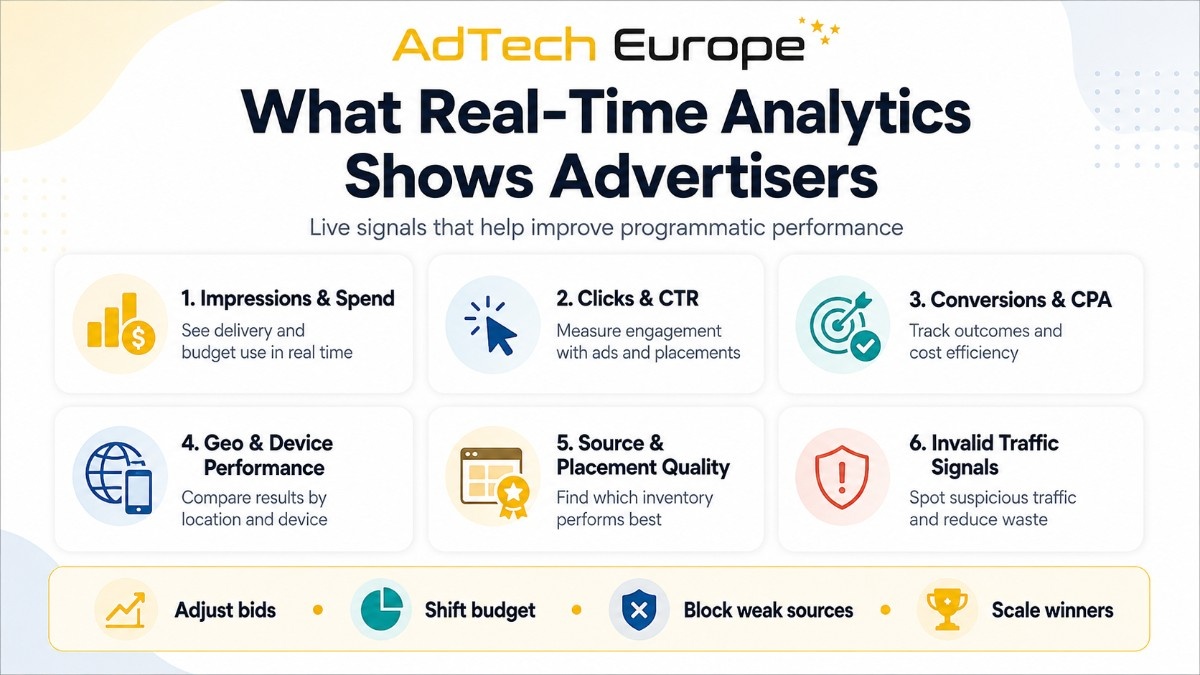
Real-time analytics gives advertisers a live view of how programmatic inventory is performing. Instead of waiting for delayed reports, buyers can see which traffic sources, devices, geos, formats, and placements are helping or hurting campaign results.
This helps media buyers answer practical questions:
- Which inventory sources are driving real conversions?
- Which placements are spending budget without results?
- Which geos or devices should get higher bids?
- Which traffic paths show weak quality signals?
- Which campaigns are ready to scale?
| Analytics Area | What Advertisers Can See | How It Helps |
| Traffic source | Site, app, publisher, or supply partner performance | Helps find strong and weak inventory sources |
| Audience segment | Geo, device, OS, browser, and language data | Helps refine targeting and bidding |
| Campaign outcome | Clicks, conversions, CPA, ROAS, and spend | Shows whether inventory is profitable |
| Quality signal | Invalid traffic, bot patterns, bounce issues, or weak engagement | Helps reduce wasted spend |
| Auction signal | Win rate, CPM, bid price, and delivery volume | Helps improve bid strategy |
Why Real-Time Analytics Matters for Inventory Performance
Programmatic inventory is not equal across every source. Two placements may look similar but perform very differently.
One source may bring high CTR but poor conversions. Another may bring fewer clicks but stronger CPA. A third may show high invalid traffic or weak engagement.
Real-time analytics helps advertisers spot these patterns early.
It Helps Buyers Act Faster
Without live data, teams may wait for end-of-day reports before making changes. That delay can waste budget.
With real-time analytics, buyers can:
- Pause weak sources
- Increase bids on strong segments
- Lower bids where CPA is too high
- Shift spend by geo, device, or format
- Block suspicious traffic
- Scale placements with stable performance
For teams buying programmatic DSP inventory, faster decisions can directly improve campaign efficiency.
Main Metrics Used to Optimize Programmatic Inventory
| Metric | What It Shows | Optimization Use |
| CTR | How often users click ads | Compare creative and placement engagement |
| CPA | Cost per conversion or action | Control performance campaign efficiency |
| CPM | Cost per 1,000 impressions | Judge traffic cost and auction pressure |
| Win rate | How often bids win auctions | Adjust bids and supply strategy |
| Fill rate | How much available inventory is sold or served | Identify supply gaps or delivery issues |
| Conversion rate | How often traffic converts | Find strong geos, devices, and sources |
| IVT rate | Invalid or suspicious traffic level | Protect budget and campaign data |
| ROAS | Revenue from ad spend | Scale profitable inventory |
The best media buyers do not look at one metric alone. They compare cost, quality, and outcome together.
How Real-Time Analytics Improves Traffic Quality
Traffic quality is one of the biggest issues in programmatic advertising. Bad traffic can drain budgets, damage campaign data, and make optimization harder.
Real-time analytics helps detect quality issues such as:
- Very high click volume with no conversions
- Sudden traffic spikes from one source
- Abnormal CTR patterns
- Repeated clicks from weak placements
- Poor post-click behavior
- Suspicious device, IP, or browser patterns
When these issues appear, advertisers can block sources, reduce bids, or adjust targeting. This supports better buying decisions and stronger protection against wasted spend.
For advertisers focused on cleaner traffic signals, analytics should be part of daily campaign control.
How Analytics Helps DSPs Optimize Supply Paths
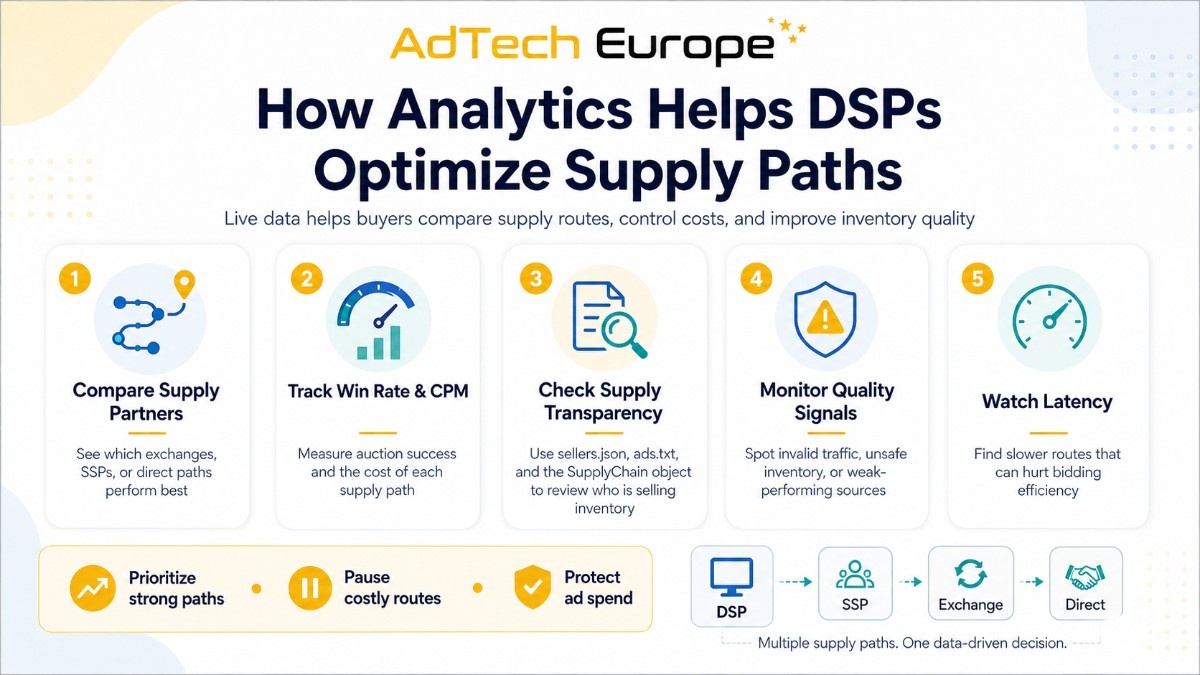
DSP owners need more than campaign-level reports. They also need supply-side visibility.
Supply path optimization, or SPO, helps DSPs choose better routes to inventory. Real-time analytics can show which partners, exchanges, or sources deliver stronger performance.
Useful SPO Signals
| SPO Signal | What It Helps Identify |
| Supply partner win rate | Which partners offer reachable inventory |
| Average CPM by path | Which routes are too costly |
| Conversion quality by source | Which supply paths support real results |
| Latency | Which routes slow down bidding or delivery |
| IVT and fraud rate | Which partners need stricter controls |
| Duplicate supply | Where the same inventory appears through many routes |
This is important for DSPs, ad networks, and agencies that want more control over how they access premium global traffic.
Real-Time Analytics Across the Programmatic Ecosystem
Programmatic performance depends on how DSPs, SSPs, ad exchanges, and supply partners work together.
| Ecosystem Player | How Real-Time Analytics Helps |
| Advertisers | Improve bids, targeting, budgets, and conversions |
| Agencies | Manage many campaigns from one reporting view |
| DSP owners | Evaluate source quality and supply paths |
| SSPs | Monitor fill rate, yield, and buyer demand |
| Ad exchanges | Track auction health and bid activity |
| Media buyers | Find scalable inventory with better performance |
Understanding the role of each platform helps buyers make better decisions in the programmatic ecosystem.
Advanced Signals That Improve Inventory Decisions
Basic metrics like clicks, spend, and CPA are important. But stronger programmatic teams also look at deeper signals that explain why inventory performs well or poorly.
Bidstream Speed
Bidstream speed shows how fast bid requests move between supply partners, exchanges, and DSPs. Slow paths can reduce auction success and limit campaign delivery.
When buyers track speed, they can avoid supply routes that create delays or weak auction results.
Supply Path Quality
Supply path quality shows which partners give the cleanest and most useful access to inventory.
A good supply path should offer:
- Clear source visibility
- Stable pricing
- Low duplicate inventory
- Strong traffic quality
- Reliable delivery
This helps DSP owners and media buyers spend more on better routes and reduce weak supply paths.
Pre-Bid and Post-Bid Quality Checks
Pre-bid checks help filter risky impressions before money is spent. Post-bid checks show what happened after the ad was served.
Together, they help advertisers understand:
- Which sources deserve more budget
- Which placements should be blocked
- Which traffic patterns look suspicious
- Which segments can scale safely
These deeper signals make real-time analytics more useful than basic reporting alone.
How Advertisers Can Use Real-Time Analytics Without Overcomplicating Campaigns
Advertisers do not need a complex process to benefit from analytics. They need a clear view of what to watch and when to act.
Simple Optimization Areas
- Check spend and CPA daily
- Compare performance by geo and device
- Review source-level results
- Pause placements with poor results
- Increase budget only where performance is stable
- Watch traffic quality before scaling
- Compare formats before choosing one winner
This keeps campaign management practical and reduces guesswork.
How AdTech Europe Supports Real-Time Inventory Optimization
AdTech Europe helps advertisers, agencies, DSP owners, and ad-tech businesses access programmatic inventory with more visibility and control.
Teams can use AdTech Europe to:
- Access scalable programmatic inventory
- Review live traffic and pricing insights
- Connect DSPs to ready supply
- Improve source-level buying decisions
- Support fraud prevention and traffic quality checks
- Expand demand through XML and OpenRTB connections
- Evaluate DSP ownership with stronger inventory access
For ad-tech businesses that want to expand demand, OpenRTB connectivity can help connect systems more efficiently across the programmatic market.
Ready to Optimize Programmatic Inventory With Better Visibility?
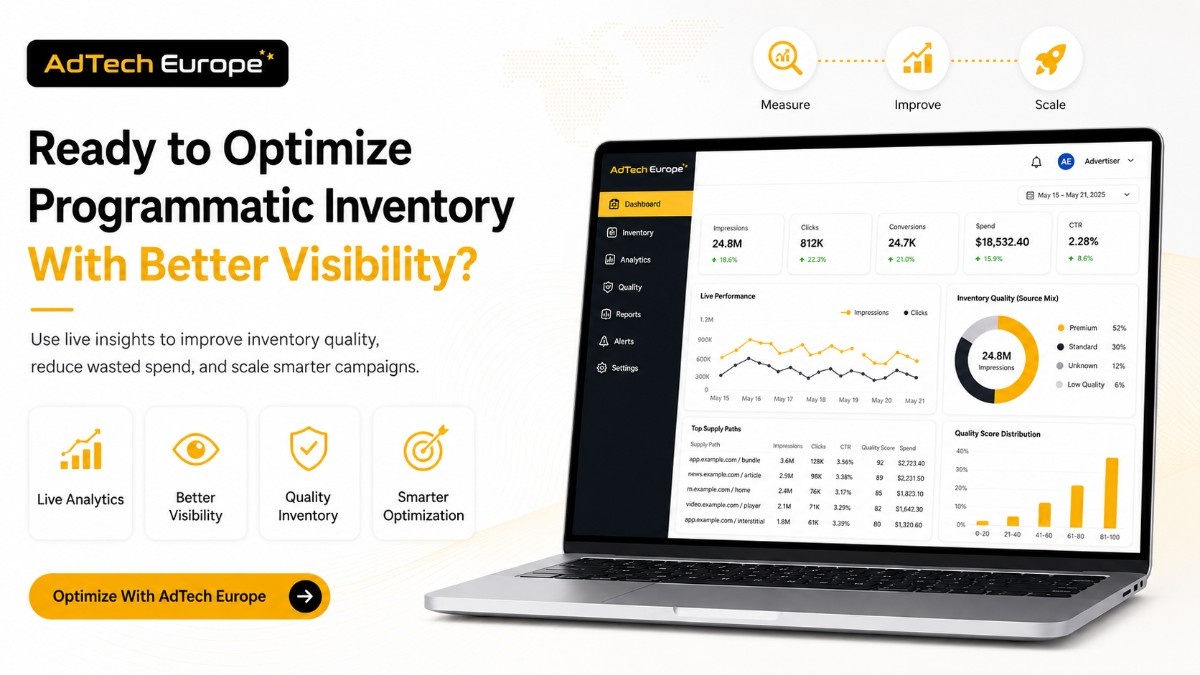
AdTech Europe helps advertisers, agencies, DSP owners, and media buyers access programmatic inventory with stronger transparency, real-time insights, and traffic quality controls.
Whether you want to connect a DSP to ready supply, improve campaign performance, reduce wasted spend, or scale across global inventory, AdTech Europe gives your team the data and access needed to make smarter programmatic buying decisions.
FAQS
What is programmatic inventory performance?
Programmatic inventory performance shows how well ad placements, sources, formats, and supply partners deliver campaign results. It includes cost, clicks, conversions, quality, and scale.
Why is real-time analytics important for DSP campaigns?
Real-time analytics helps DSP users make faster decisions. They can adjust bids, block weak sources, and scale better traffic before budget is wasted.
Which metrics should advertisers track first?
Advertisers should start with spend, impressions, clicks, CTR, conversions, CPA, CPM, and source quality. These metrics give a clear view of cost and outcome.
Can real-time analytics reduce ad fraud?
It can help detect suspicious patterns faster. It works best when combined with fraud protection, source controls, pre-bid filters, and post-bid traffic analysis.
How does real-time analytics help DSP owners?
DSP owners can use analytics to compare supply partners, improve bidding logic, monitor inventory quality, and optimize supply paths.
Is real-time analytics useful for small advertisers?
Yes. Small advertisers can use it to control budgets, test sources carefully, and avoid scaling weak traffic too early.