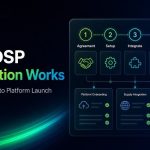
DSP acquisition gives your business a faster path to platform ownership, but launch success depends on the steps that happen after the deal.
A DSP needs more than branding and login access. It needs hosting, admin setup, supply connections, campaign tools, tracking checks, reporting tests, and a clear operating plan before advertisers can use it with confidence.
This guide explains how DSP acquisition works from agreement to launch. It helps agencies, advertisers, media buyers, and DSP owners understand the practical steps needed to turn an acquired platform into a live buying system.
What Happens After a DSP Acquisition Agreement?
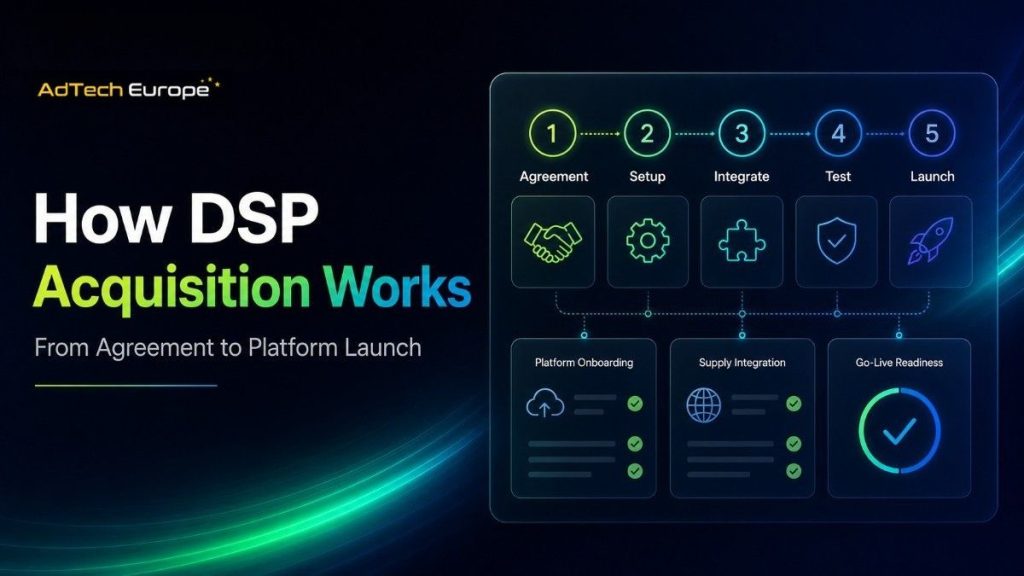
After a DSP acquisition agreement is confirmed, both sides should move into a structured launch process.
This process usually includes:
- Confirming what technology is included
- Preparing branding and platform access
- Reviewing hosting and infrastructure
- Setting up advertiser accounts
- Connecting supply sources
- Testing campaign creation
- Checking tracking and reporting
- Launching controlled test campaigns
- Moving to wider campaign scaling
This is where many buyers make mistakes. They focus only on the sale terms and forget the launch plan.
A DSP may be powerful, but it still needs setup, supply, QA, and operating rules before it can support real advertiser spend. For buyers still comparing ownership models, DSP control options should be reviewed before the launch phase begins.
DSP Acquisition Workflow: Agreement to Launch
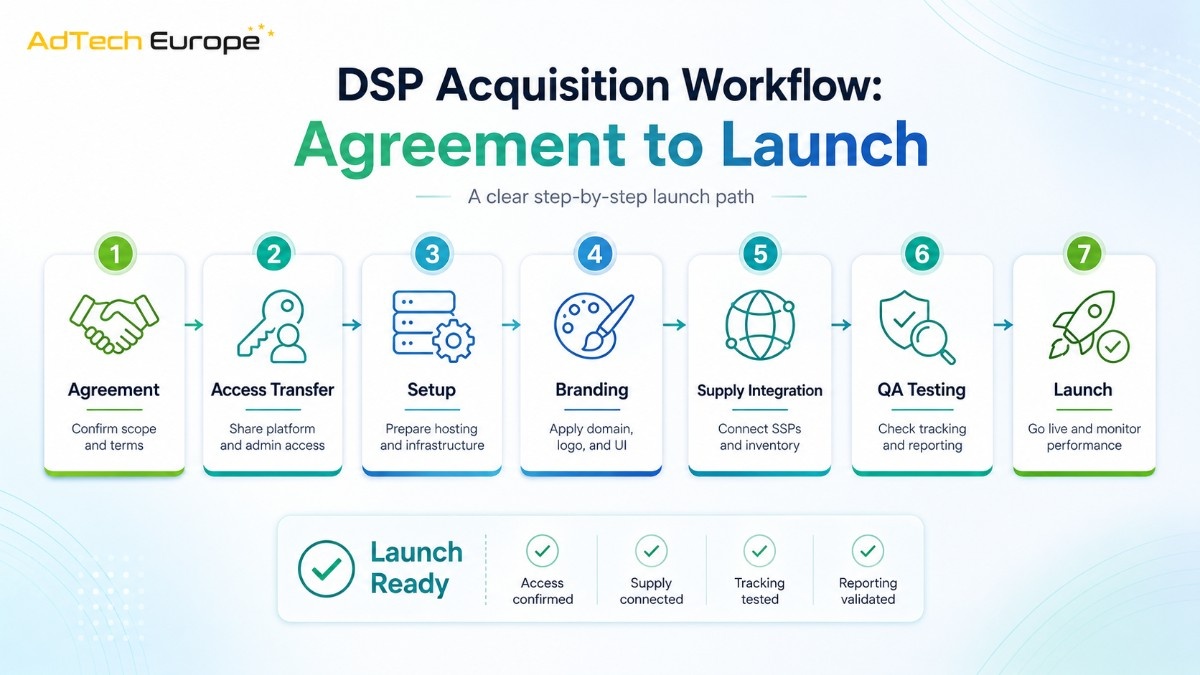
A clean acquisition workflow keeps the buyer, technical team, and platform provider aligned.
| Stage | Main Action | Launch Goal |
| Agreement confirmation | Define ownership scope, access, support, and delivery terms | Avoid confusion after signing |
| Asset handoff | Transfer platform access, admin roles, code access, and documentation | Give the buyer control |
| Infrastructure setup | Prepare hosting, domains, SSL, logs, monitoring, and backups | Make the DSP stable |
| Branding setup | Add logo, colors, platform name, email templates, and login domain | Make the DSP market-ready |
| Supply setup | Connect SSPs, exchanges, XML feeds, or direct inventory | Give campaigns traffic access |
| Tracking QA | Test pixels, postbacks, macros, click flow, and conversion events | Make reporting reliable |
| Test campaigns | Run small budgets by geo, device, format, and source | Find issues before scaling |
| Launch review | Confirm performance, reporting, fraud checks, and support process | Move to active operation |
This workflow helps your team avoid a common problem: owning a DSP that is not ready for commercial use.
What Should Be Included in the Platform Handoff?
The handoff should be clear and documented. A buyer should know exactly what they receive, where it is hosted, who can access it, and how the DSP will be managed after launch.
A proper handoff may include:
- Admin panel access
- Advertiser dashboard access
- Source-code package or repository access
- Database and reporting access
- Hosting credentials or deployment details
- API documentation
- Campaign setup guide
- Tracking and macro documentation
- Supply partner details
- User role permissions
- Support and maintenance scope
If source code is part of the deal, the buyer should confirm how it can be used. Can it be modified? Can it be hosted by the buyer? Can another development team work on it? These answers affect long-term control.
For buyers who need deeper technical ownership, a source-code DSP gives more room for custom bidding logic, reporting changes, and roadmap control.
DSP Acquisition vs White-Label DSP vs DSP License: Launch-Control View
DSP acquisition, white-label DSP, and DSP license models can all help a business enter programmatic buying. But they do not give the same level of launch control.
| Model | Launch Speed | Control Level | Best Use Case |
| DSP acquisition | Medium | High | Businesses that want ownership, control, and long-term platform value |
| White-label DSP | Fast | Medium | Agencies that need a branded DSP without owning the full stack |
| DSP license | Fast | Low to medium | Teams that want access without managing core technology |
| Build from scratch | Slow | High | Large teams with strong engineering resources and long timelines |
A white-label DSP is useful when speed matters most. It can help agencies or networks launch under their own brand without building the full platform.
A DSP license is useful when a team wants access to a ready system but does not need deep control.
DSP acquisition is stronger when the buyer wants to own the platform layer, control data, shape the product roadmap, and reduce dependence on third-party access. Many agencies move toward acquisition after they outgrow rented access and need more margin control. This is why white-label upgrades are becoming common for serious programmatic teams.
Who Should Acquire a DSP?
DSP acquisition works best for businesses that already understand media buying or have a clear plan to monetize programmatic demand.
| Buyer Type | Why Acquisition Fits |
| Advertising agencies | They can serve multiple clients from their own platform |
| Media buyers | They can control bidding rules, sources, and optimization |
| Ad networks | They can add a demand-side buying product for advertisers |
| Affiliate teams | They can test offers across sources and control campaign data |
| Performance advertisers | They can reduce dependence on third-party buying tools |
| Existing DSP operators | They can improve infrastructure, ownership, or supply access |
| Ad-tech startups | They can launch faster than building from zero |
A business should not acquire a DSP only because it sounds advanced. It should acquire one because there is a clear use case.
Good signals include:
- Existing advertiser demand
- Regular media spend
- Need for better traffic control
- Need for stronger reporting
- Need for platform branding
- Plan to sell managed or self-serve access
- Ability to support campaign operations
Teams unsure about fit can compare their goals with DSP buyer needs before making the decision.
How DSP Owners Make Money After Launch
DSP owners make money by controlling the buying platform between advertisers and programmatic inventory.
The exact model depends on whether the owner serves direct advertisers, agencies, affiliate teams, or reseller partners.
| Revenue Model | How It Works | Best For |
| Media markup | Buy inventory and sell it with a margin | Agencies and ad networks |
| Managed service fee | Charge for campaign setup, testing, and optimization | Advertisers needing support |
| Self-serve accounts | Let advertisers run campaigns through the DSP | Networks and platform owners |
| Platform fee | Charge for access, seats, or premium tools | B2B DSP operators |
| White-label resale | Offer branded DSP access to partners | Regional agencies and resellers |
| Optimization service | Charge for reporting, source review, and performance work | Performance teams |
The strongest model is often mixed. For example, an agency may charge managed service fees, keep media markup, and later offer self-serve access to selected advertisers.
A DSP owner also needs quality inventory. Without supply, the platform cannot create campaign volume. AdTech Europe’s DSP inventory access can support owners who need traffic after platform setup.
Why Acquire a DSP Instead of Building From Scratch?
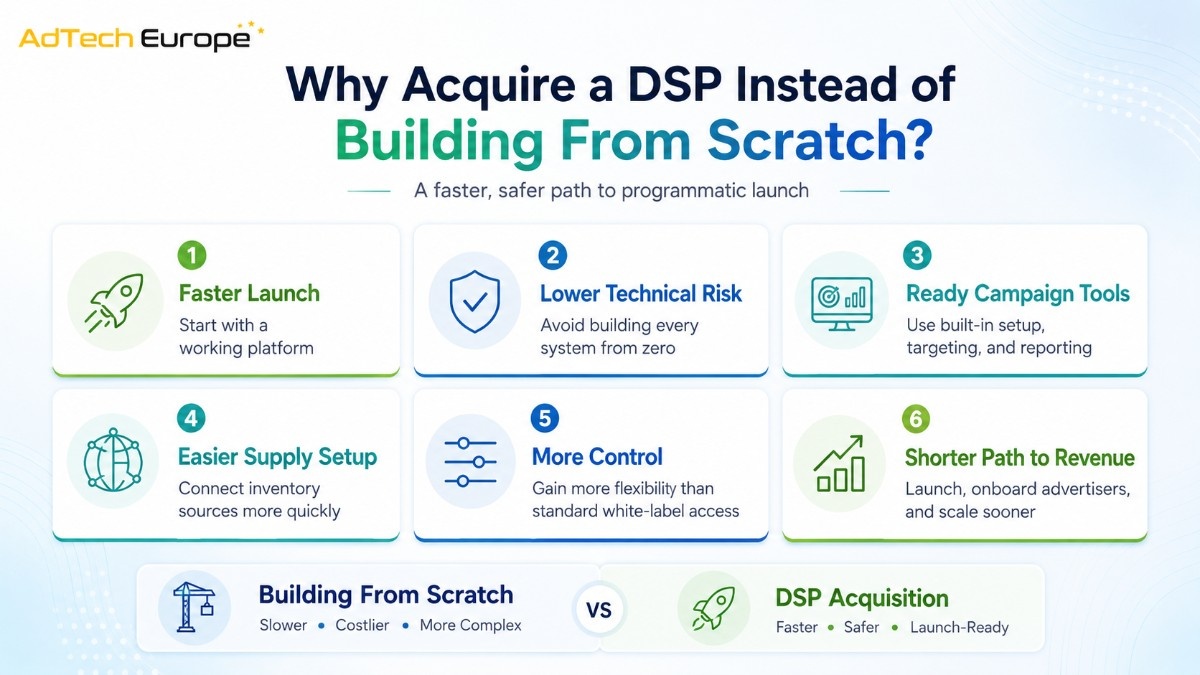
Building a DSP from scratch gives full control, but it also takes time, money, and strong technical resources.
For many agencies, media buyers, and ad-tech businesses, DSP acquisition is a faster way to launch with a working platform.
1. Faster Launch
A DSP needs campaign tools, bidder logic, tracking, reporting, user roles, and supply connections.
Building these from zero can take months. Acquisition gives your team a ready base to set up, test, and launch faster.
2. Lower Technical Risk
New DSP builds often face bugs in bidding, pacing, tracking, and reporting.
A ready DSP reduces early risk because the main system is already built and can be tested before scaling.
3. Ready Campaign Tools
An acquired DSP may already include:
- Campaign setup
- Budget control
- Targeting options
- Creative tools
- Reporting dashboards
This helps your team start campaign testing sooner.
4. Easier Supply Setup
A DSP needs inventory to create value.
With acquisition, the platform may already support SSPs, exchanges, XML feeds, or direct traffic sources. This makes supply testing easier after launch.
5. More Control Than White-Label Access
White-label DSPs are fast, but the provider usually controls the core system.
DSP acquisition gives more control over branding, data, bidding logic, infrastructure, and future customization.
6. Shorter Path to Revenue
Building from scratch delays revenue until the platform is developed and tested.
Acquisition lets your team move sooner into campaign testing, advertiser onboarding, and media buying revenue.
Final Takeaway
DSP acquisition gives a better balance of speed, control, and launch readiness.
Instead of building every system from zero, your team can start with a working platform and improve it over time.
Launch Readiness Checklist for DSP Buyers
Before launching live campaigns, use a simple readiness check.
| Area | What to Check |
| Platform access | Admin, advertiser, and operator logins work correctly |
| Branding | Domain, logo, login page, dashboard labels, and email templates are ready |
| Tracking | Click tracking, conversion pixels, postbacks, and macros are tested |
| Supply | Inventory sources are active and mapped to campaign formats |
| Reporting | Spend, impressions, clicks, conversions, win rate, and source data appear correctly |
| Fraud controls | Basic filters, source review, and blocklist options are active |
| Payments | Advertiser billing, deposits, invoices, or internal spend rules are clear |
| Support | Who handles bugs, campaign issues, and technical updates is defined |
Do not start with large budgets. Start with controlled tests.
A good first launch may include one geo, one format, one offer, and a small source group. This makes it easier to find tracking issues, weak traffic, or reporting gaps before scaling.
Common Launch Mistakes to Avoid
DSP acquisition can fail when the launch process is rushed.
Avoid these mistakes:
- Signing the agreement without a handoff plan
- Launching campaigns before tracking is tested
- Connecting supply without quality review
- Giving advertiser access before user roles are checked
- Scaling spend before source-level data is stable
- Ignoring fraud signals
- Not defining support responsibility
- Treating the DSP like a finished product instead of an operating system
A DSP is not just software. It is a media buying system. It needs people, process, traffic, data, and optimization.
How AdTech Europe Supports DSP Acquisition Launches
AdTech Europe helps advertisers, agencies, media buyers, ad networks, and DSP owners move from DSP agreement to active platform launch with less technical friction.
Support can include platform setup, white-label branding, source-code and ownership options, supply connection, campaign testing, reporting checks, and post-launch optimization guidance.
For buyers that need traffic after setup, premium global inventory can support scalable programmatic growth once the DSP is ready for live campaigns.
Ready to Launch Your Own Programmatic DSP?
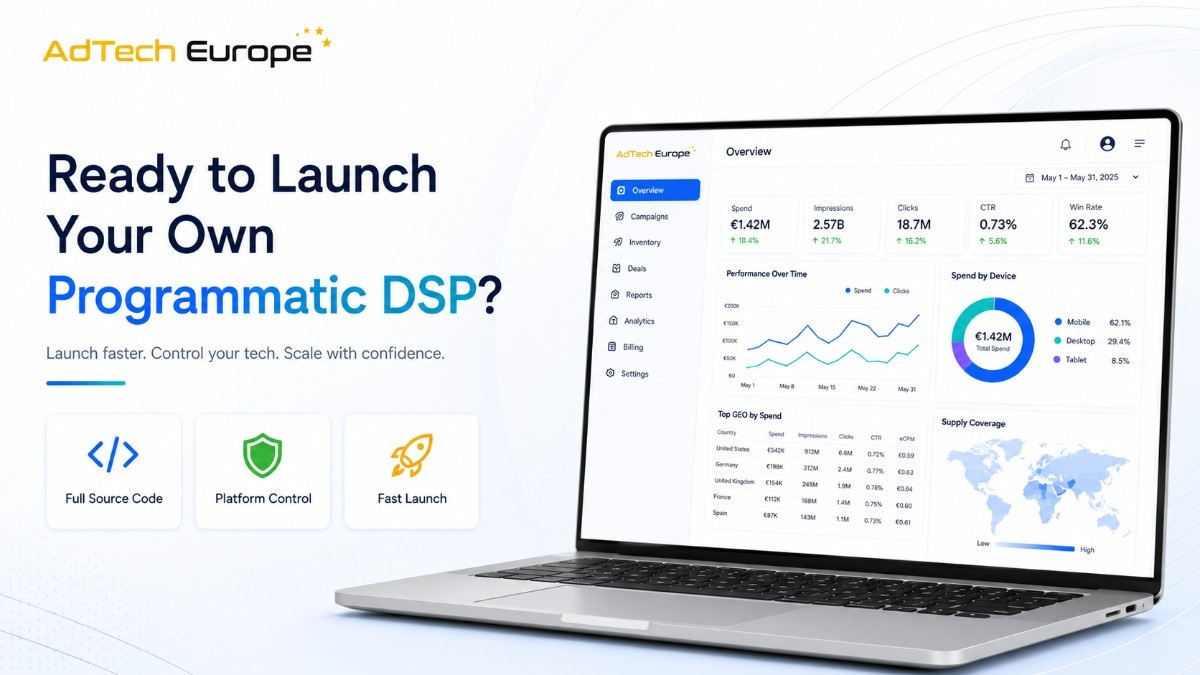
AdTech Europe helps advertisers, agencies, media buyers, ad networks, and DSP owners acquire and launch a demand-side platform with ownership control, branding, supply access, and scalable infrastructure.
Whether you want to move beyond rented DSP access, control your bidding environment, launch a branded buying platform, or build long-term programmatic revenue, AdTech Europe gives you the technology and launch support needed to move from agreement to active DSP operation with confidence.
FAQS
1. What should be confirmed before the DSP handoff starts?
The buyer should confirm ownership scope, platform access, source-code terms, hosting setup, support coverage, supply access, and launch responsibilities.
2. Should supply be connected before or after branding?
Branding can happen first, but supply should be prepared before campaign testing. A DSP cannot be fully tested without real inventory access.
3. What should the first DSP test campaign check?
The first test should check tracking, spend delivery, bid response, reporting accuracy, conversion flow, traffic quality, and source-level performance.
4. Can a DSP launch with only one ad format?
Yes. Starting with one format can be safer. It helps the buyer test the platform before adding more formats, geos, or traffic sources.
5. Who should manage the DSP after launch?
A DSP usually needs AdOps, account management, technical support, and performance review. One person can manage early testing, but scaling needs clearer roles.
6. What launch data should be reviewed first?
Review impressions, clicks, spend, win rate, CTR, conversions, CPA, source quality, rejected bids, and fraud signals.
7. When should a DSP owner scale budgets?
Budgets should scale only after tracking is stable, weak sources are blocked, conversion data is clear, and campaign performance is repeatable.
8. Is platform launch the same as platform success?
No. Launch only means the DSP is live. Success depends on traffic quality, advertiser demand, optimization, reporting accuracy, and long-term platform support.