Introduction
Programmatic advertising has transformed the digital marketing landscape by automating how advertising inventory is bought and sold. Instead of manual negotiations between advertisers and publishers, modern advertising transactions occur in milliseconds through a complex ecosystem of technology platforms.
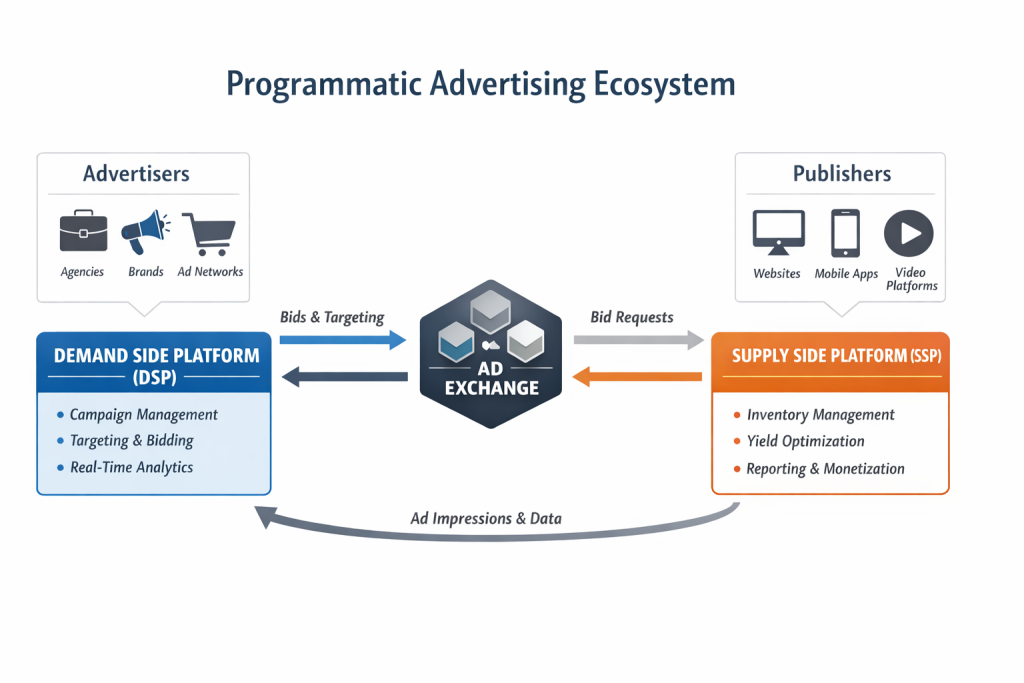
At the core of this ecosystem are three key components: the Demand Side Platform (DSP), Supply Side Platform (SSP), and Ad Exchange. Each platform plays a critical role in enabling real time bidding, optimizing ad delivery, and connecting advertisers with publishers at scale.
Understanding how these systems work together is essential for businesses looking to launch their own advertising platform, optimize campaigns, or build scalable ad tech infrastructure.
In this guide, we explain the differences between DSPs, SSPs, and Ad Exchanges, and how they form the backbone of programmatic advertising.
What Is Programmatic Advertising?
Programmatic advertising refers to the automated buying and selling of digital advertising inventory using software platforms and real time bidding technology.
Instead of negotiating advertising deals manually, advertisers and publishers rely on programmatic platforms that automatically evaluate available ad impressions and determine the best price in real time.
Key advantages of programmatic advertising include:
-
Real time bidding for ad impressions
-
Advanced audience targeting
-
Automated campaign optimization
-
Scalable advertising across multiple traffic sources
-
Data driven decision making
The infrastructure behind this automation is powered by DSPs, SSPs, and Ad Exchanges.
What Is a DSP (Demand Side Platform)?
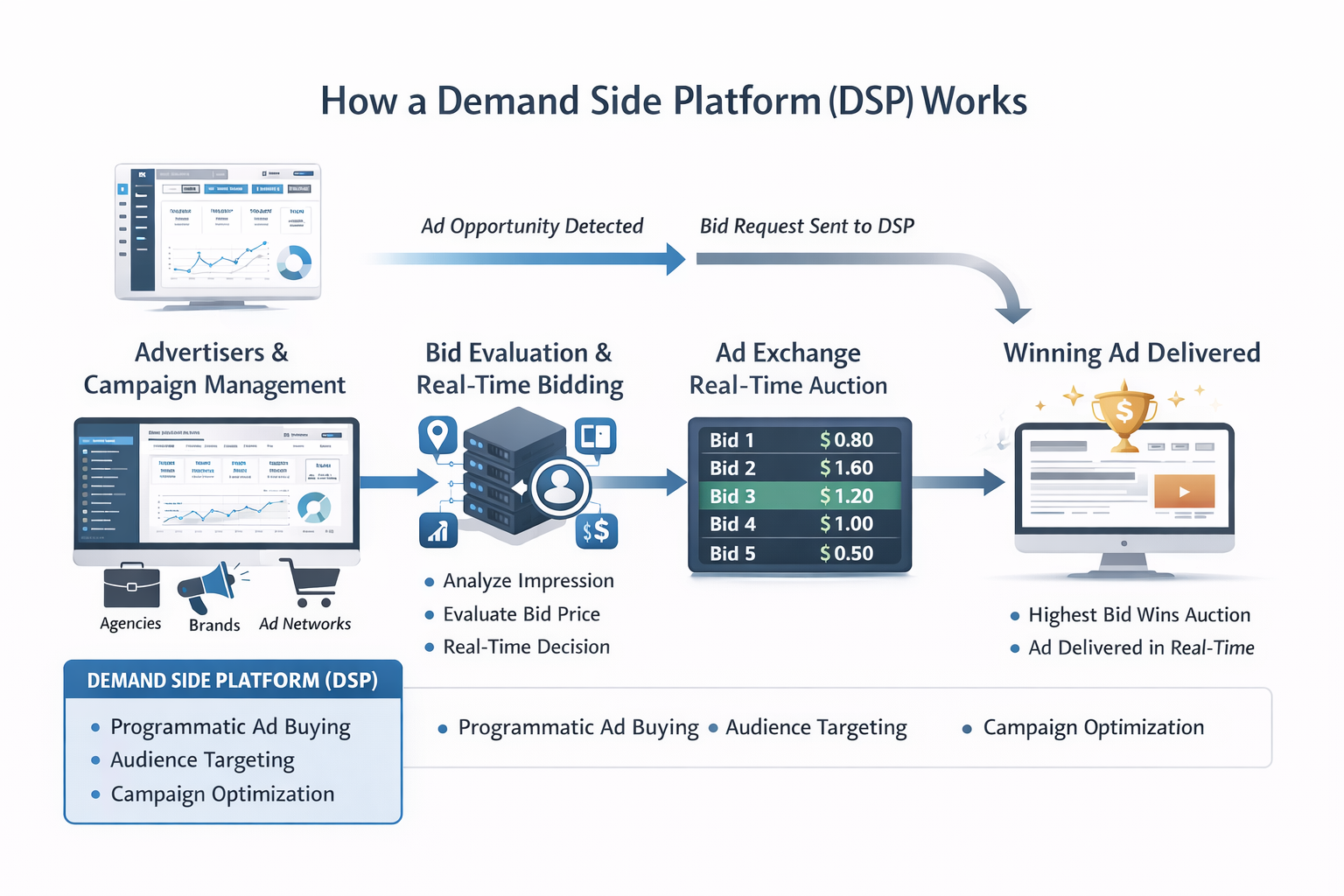
A Demand Side Platform (DSP) is a technology platform used by advertisers and agencies to purchase advertising inventory across multiple publishers and ad exchanges.
DSPs allow advertisers to manage campaigns, set targeting parameters, optimize bids, and analyze performance through a centralized interface.
Key Functions of a DSP
A DSP enables advertisers to:
-
Buy ad impressions programmatically
-
Target specific audiences and devices
-
Set bidding strategies
-
Optimize campaigns for CTR, CPA, or conversions
-
Access inventory from multiple supply sources
How a DSP Works
When a user visits a website or opens an app, an ad impression becomes available. The publisher’s supply platform sends this opportunity into the programmatic marketplace.
The DSP evaluates the request in real time and decides whether to bid on that impression based on campaign settings such as:
-
geographic targeting
-
device type
-
user behavior
-
bid price
-
campaign budget
If the DSP wins the auction, the advertiser’s ad is delivered instantly.
What Is an SSP (Supply Side Platform)?
A Supply Side Platform (SSP) is the technology used by publishers to sell advertising inventory programmatically.
The SSP helps publishers maximize revenue by offering their available impressions to multiple demand sources simultaneously.
Key Functions of an SSP
Publishers use SSPs to:
-
manage advertising inventory
-
connect with multiple DSPs
-
optimize yield and pricing
-
control which advertisers can access their inventory
-
monitor performance and revenue
How an SSP Works
When a visitor loads a webpage or mobile app, the SSP sends information about the available ad impression into the programmatic marketplace.
This information may include:
-
user location
-
device type
-
browser
-
page content
-
ad placement
The SSP forwards this bid request to connected ad exchanges and DSPs where advertisers compete in real time to win the impression.
What Is an Ad Exchange?
An Ad Exchange is the digital marketplace where advertising inventory is bought and sold through real time auctions.
It acts as the intermediary that connects DSPs and SSPs, allowing advertisers and publishers to transact programmatically.
Key Functions of an Ad Exchange
An ad exchange:
-
facilitates real time bidding auctions
-
connects demand and supply platforms
-
ensures transparent pricing
-
processes millions of bid requests per second
-
distributes inventory to multiple buyers
Ad exchanges allow advertisers to access inventory from thousands of publishers while enabling publishers to monetize their traffic through multiple demand partners.
How DSP, SSP, and Ad Exchange Work Together
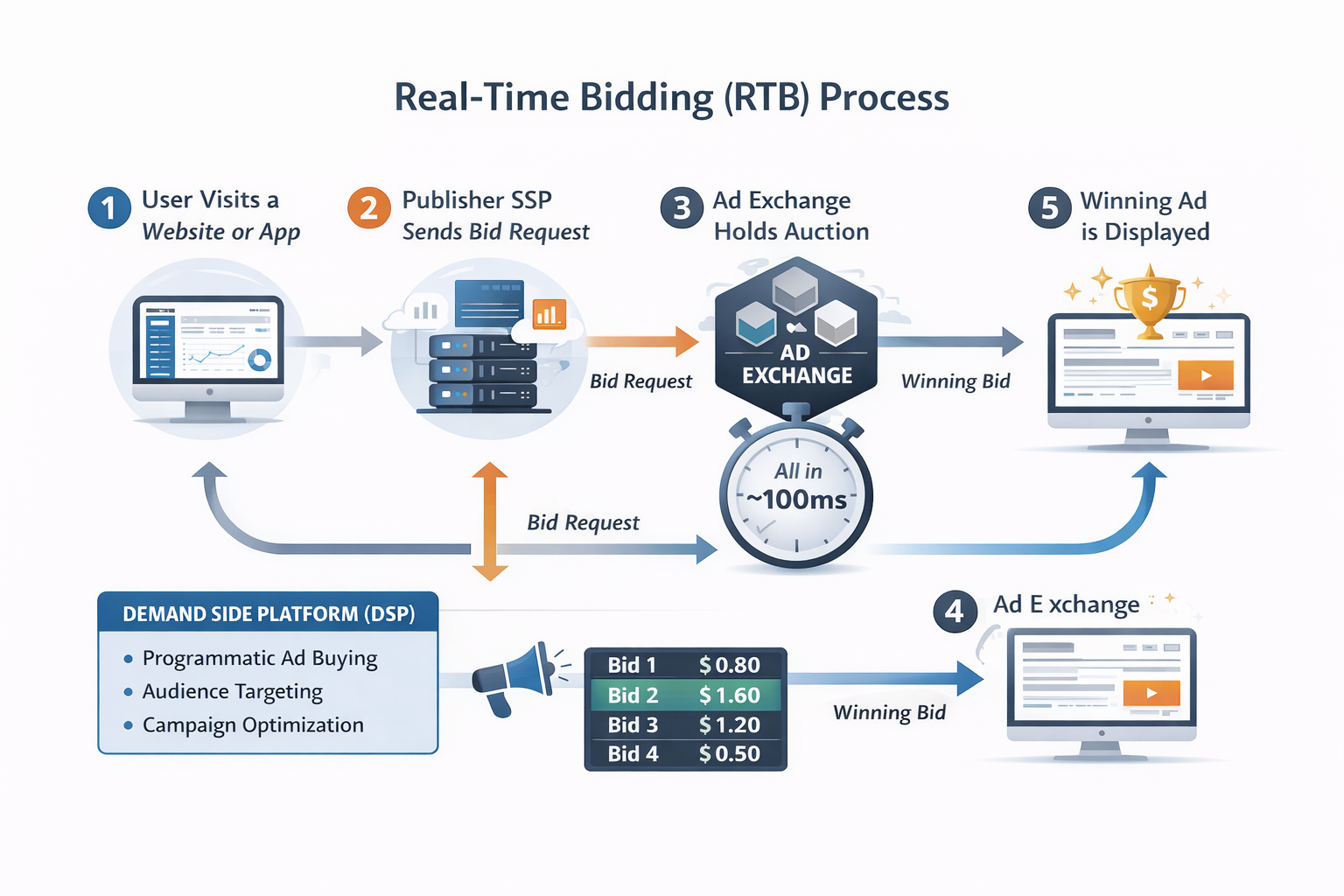
The interaction between these platforms happens extremely quickly, typically within 100 milliseconds.
A simplified workflow looks like this:
-
A user visits a website.
-
The publisher’s SSP sends a bid request.
-
The request enters the ad exchange.
-
DSPs analyze the impression opportunity.
-
Advertisers submit bids.
-
The highest bid wins the auction.
-
The winning ad is displayed to the user.
This entire process happens instantly while the page loads.
The Importance of OpenRTB
Most programmatic platforms communicate using the OpenRTB protocol, a standardized framework that enables DSPs, SSPs, and ad exchanges to exchange bid requests and responses efficiently.
OpenRTB ensures interoperability across the programmatic ecosystem and enables scalable integration between advertising platforms.
Without standardized protocols, it would be difficult for different ad tech platforms to communicate in real time.
Why Businesses Launch Their Own DSP Platforms
As programmatic advertising continues to grow, many companies are choosing to launch their own DSP platforms rather than relying entirely on third party advertising networks.
Owning a DSP offers several advantages:
-
full control over advertising infrastructure
-
access to multiple traffic sources
-
customizable bidding algorithms
-
better optimization capabilities
-
scalable revenue opportunities
Companies such as agencies, ad networks, media groups, and technology startups increasingly build or acquire DSP platforms to gain more control over their advertising operations.
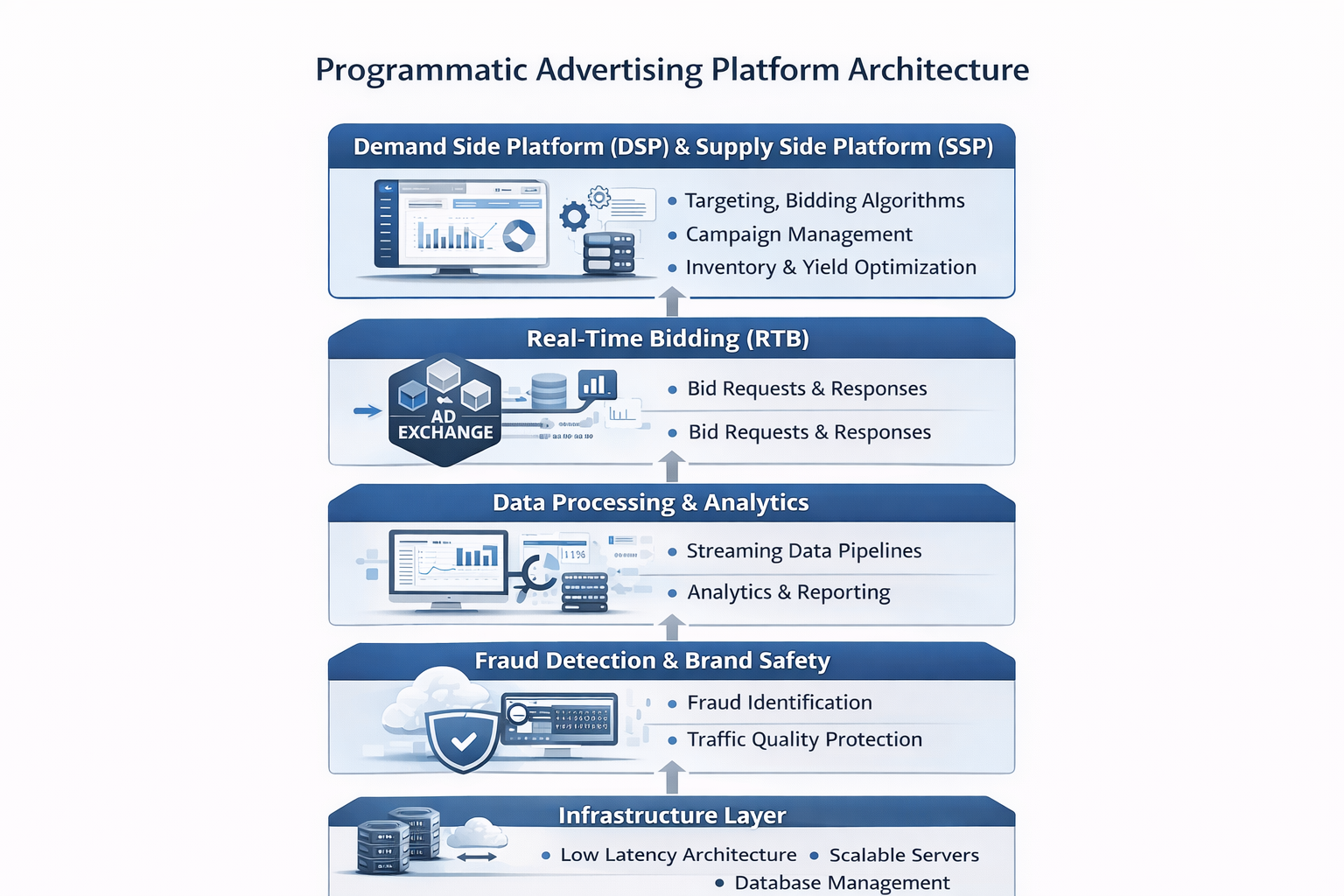
Building Programmatic Infrastructure with AdTech Europe
Launching a programmatic advertising platform requires deep expertise in infrastructure, integrations, and real time bidding technology.
AdTech Europe provides companies with the ability to rent, lease, or acquire a fully functional programmatic DSP platform, enabling businesses to enter the programmatic advertising market faster and with significantly lower development costs.
Our platform supports:
-
OpenRTB integrations
-
multiple advertising formats
-
scalable bidding infrastructure
-
advanced campaign management tools
-
real time analytics and optimization
By leveraging modern programmatic infrastructure, businesses can launch and scale their own advertising platforms with confidence.
Conclusion
The programmatic advertising ecosystem relies on a powerful combination of DSPs, SSPs, and ad exchanges working together in real time.
DSPs enable advertisers to purchase inventory efficiently, SSPs help publishers monetize their traffic, and ad exchanges connect both sides through automated auctions.
As the digital advertising industry continues to evolve, understanding this infrastructure becomes increasingly important for companies looking to build scalable advertising technology or launch their own programmatic platforms.